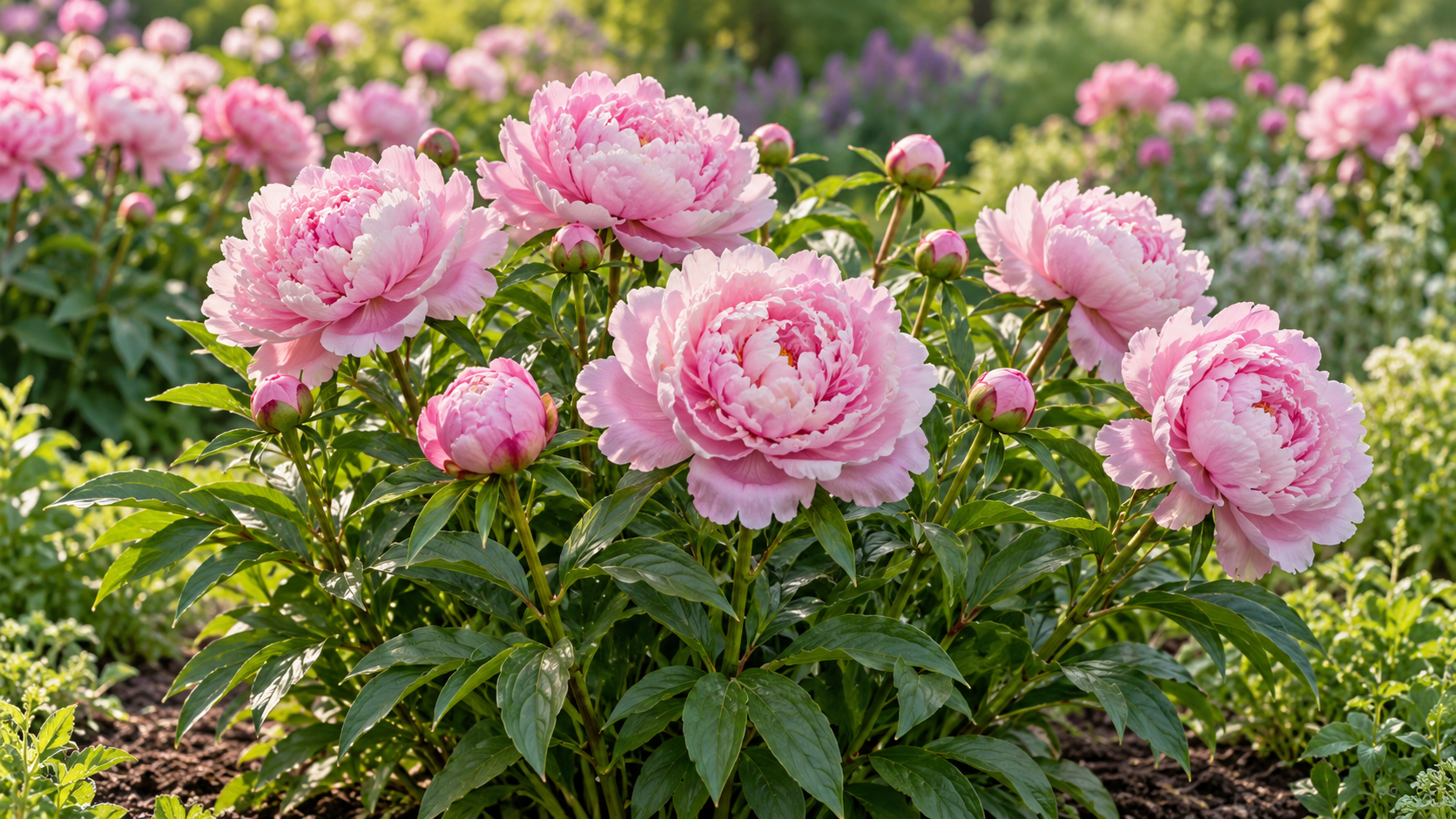
Peonies are the long-lived aristocrats of the perennial border. For a few weeks in late spring they produce some of the largest, most fragrant flowers you can grow in a cold-climate garden, in shades of pink, white, red, coral and yellow, and then spend the rest of the season as a tidy, glossy-leaved shrub. A peony planted in the right spot can bloom for 50 years or more, and clumps that outlived the gardeners who planted them are common around old farmhouses.
They have a reputation for being fussy, but most peony trouble comes down to two planting mistakes: too much shade and setting the roots too deep. Get those right on day one and a peony asks for very little afterward. The genus is named for Paeon, the physician to the gods in Greek myth, and the plant has been grown in China for well over a thousand years.
Here is what you need to know before you plant, in one table.
| Botanical name | Paeonia spp. |
|---|---|
| Common names | Peony, paeony |
| USDA zones | 3 to 8 (herbaceous); 4 to 8 (tree); 4 to 9 (Itoh) |
| Sun | Full sun to light part shade, at least 6 hours of direct sun |
| Height | 2 to 3 feet (herbaceous and Itoh); 4 to 7 feet (tree) |
| Spread | 2 to 4 feet |
| Bloom time | Late spring to early summer |
| Grown for | Flowers |
| Flower color | Pink, white, red, coral, yellow, purple, bicolor |
| Soil moisture | Average, well drained |
| Deer | Resistant |
| Drought tolerance | Moderate once established |
| Native range | Asia, Europe and western North America |
| Pet toxicity | Toxic to dogs, cats and horses (ASPCA) |
| Maintenance | Low |
Types of Peonies
Garden peonies fall into three groups. They share the same big flowers but differ in how they grow, how they are planted and what they need in fall, so it is worth knowing which one you have before you do anything with a shovel or pruners.
Herbaceous Peonies
These are the classic garden peonies, mostly hybrids and selections of Paeonia lactiflora. The stems die to the ground each fall and new red shoots push up from the roots in spring. They are the hardiest group, the easiest to find and the least expensive, and they are what most people picture when they hear the word peony.
Tree Peonies
Tree peonies are woody shrubs that keep their branches through winter and leaf out from them in spring, much like a lilac. They bloom a week or two before herbaceous types, with flowers that can reach 10 inches across on plants that slowly grow to 4 to 7 feet. Never cut a tree peony to the ground in fall: the old wood is where next year’s flowers come from.
Itoh (Intersectional) Peonies
Itoh peonies are crosses between herbaceous and tree peonies, first achieved by the Japanese breeder Toichi Itoh in the late 1940s. They combine the tree peony’s large flowers and finely cut leaves with the herbaceous peony’s habit of dying back in winter. Their stems are strong enough that they rarely need staking, and side buds open in succession, so a mature plant can stay in bloom for three weeks or more. They also brought true yellow into the herbaceous-style peony.
Where Peonies Grow Best
Herbaceous peonies grow in USDA zones 3 through 8, and they are at their best in the colder half of that range. Like hostas, they need a real winter: a stretch of cold dormancy is what sets the flower buds, which is why peonies bloom poorly in the Gulf Coast and Florida. Gardeners in zone 8 and warmer parts of zone 7 have the most success with early-blooming varieties, which open before summer heat arrives.
Give peonies full sun, meaning at least 6 hours of direct light a day. More is better in the North. In hot southern gardens, light afternoon shade helps the flowers last longer, but a peony in real shade will produce healthy leaves and few or no buds. Choose a spot with good air circulation too, away from dense hedges and the roots of large trees, since stagnant air encourages fungal disease and tree roots compete for water and nutrients.
Soil should be fertile, well drained and close to neutral, with a pH of about 6.5 to 7.0. Peonies tolerate clay if it drains, but they will rot in ground that stays wet over winter. Because a peony can stay in the same place for decades, it is worth taking the time to pick the right spot and improve the soil before you plant.
How to Plant Peonies
Early fall is the best time to plant peonies, from September to October in most of the North, about six weeks before the ground freezes. That is when nurseries ship bare-root divisions, and the roots have time to settle in before winter. Potted peonies can go in any time from spring through early fall, as long as you water them well through their first summer.
Dig a hole about 18 inches deep and wide and loosen the soil in the bottom, mixing in compost. Refill the hole partway so the root will sit at the correct height, then set it in place with the eyes (the pink or red buds on top of the root) facing up. Backfill, firm the soil gently and water well. Space plants 3 to 4 feet apart so air can move between them once they reach full size.
Planting Depth Matters Most
The single most important number in growing peonies is planting depth. Set the eyes of herbaceous and Itoh peonies no more than 2 inches below the soil surface in cold climates, and only about 1 inch deep in zones 7 and 8. A peony planted deeper than that will grow leaves but often refuses to bloom for years. The exception is the grafted tree peony, which is planted deeper, with the graft union 4 to 6 inches below the surface so the plant can form its own roots.
Be patient after planting. A new division usually takes two to three years to bloom well, and it keeps getting fuller for several years after that.
Watering and Feeding
Water new peonies about once a week in dry weather through their first growing season, soaking the root zone deeply rather than sprinkling. Once established, peonies are fairly drought tolerant and usually need extra water only during long dry spells and in late summer, when they are forming next year’s buds. Water at the base of the plant, not over the leaves.
Peonies need little fertilizer. Too much nitrogen gives lush leaves and weak stems at the expense of flowers. Spread an inch of compost around the plant each spring, or if growth is poor, apply a small amount of a low-nitrogen fertilizer such as 5-10-10 as the shoots emerge. Keep mulch thin and pulled back from the crown, since heavy mulch over the eyes has the same effect as planting too deep.
Staking and Supporting Heavy Blooms
Many double-flowered herbaceous peonies carry blooms so heavy that the stems bend to the ground after the first rain. The fix is to put support in place early in spring, when shoots are about a foot tall, so the stems grow up through it. A round peony ring or a grow-through grid works well. Tomato cages and a few stakes with twine also do the job. Single-flowered and Japanese types, Itoh peonies and newer hybrids bred for strong stems usually stand on their own.
Deadheading, Cutting and Fall Care
Deadhead peonies after the petals drop by cutting the spent flower stem back to a strong leaf. This keeps the plant tidy and stops it putting energy into seed. Leave the foliage in place all summer: the leaves feed the roots and build next year’s buds.
Cutting Peonies for the Vase
Peonies make superb cut flowers. Cut them at the marshmallow stage, when the bud shows true color and feels soft like a marshmallow when you squeeze it gently. Buds cut at this stage open over a day or two in the vase and last about a week. Wrapped dry in paper and kept in the refrigerator, they can be held for several weeks. Leave at least two or three leaves on each stem you cut, and do not cut more than a third of the flowers from a young plant.
Fall Cleanup
After frost blackens the foliage, cut herbaceous peonies to the ground and remove the stems and leaves from the garden rather than composting them. This removes the spores of botrytis and other leaf diseases that overwinter on old foliage. Itoh peonies are cut back the same way, leaving a few inches of stem. Tree peonies should only have dead or damaged wood removed. Newly planted peonies in very cold zones benefit from a loose layer of mulch in their first winter, pulled back in spring.
Dividing and Moving Peonies
Unlike most perennials, peonies do not need regular dividing. Many are left alone for decades. Divide only when a clump has grown too large, blooms poorly at the center or needs to move. Do the job in early fall. Cut the stems down, dig widely around the clump, lift it and wash off the soil so you can see the eyes. Cut the root into pieces with a sharp knife, each with three to five eyes and a good section of root, and replant at the correct depth. Expect a year or two with few flowers while divisions recover. Tree peonies resent disturbance and are best left where they are.
Best Peony Varieties
Peony flowers come in several forms: single, with one or two rows of petals around a boss of stamens; Japanese and anemone, with a center of narrow petal-like segments; semi-double; bomb; and full double. Singles and Japanese types stand up better to rain. Doubles give the classic fluffy look. Choosing early, midseason and late varieties stretches the peony season to around six weeks. These proven varieties are a good place to start.
‘Sarah Bernhardt’
Introduced in France in 1906, this is the best-known peony in the world: large, fragrant, apple-blossom pink double flowers late in the season. It is dependable, widely available and a florist’s standard, though its heavy blooms need support.
‘Festiva Maxima’
Dating to 1851, ‘Festiva Maxima’ bears big, fragrant white double flowers with occasional crimson flecks near the center. It blooms early to midseason and is one of the most reliable white peonies ever bred.
‘Karl Rosenfield’
A classic crimson double with strong stems and a long track record, ‘Karl Rosenfield’ blooms in midseason and is one of the easiest red peonies to grow.
‘Bowl of Beauty’
This Japanese-form peony has rosy pink outer petals around a large creamy center. It stands up to rain better than most doubles and draws attention from across the garden.
‘Coral Charm’
An early semi-double whose flowers open deep coral and fade to peach and then cream over several days. It has strong stems and is a favorite of cut-flower growers.
‘Bartzella’
The best-known Itoh peony, ‘Bartzella’ produces lightly fragrant, clear lemon-yellow double flowers on a sturdy, self-supporting plant. A mature clump can carry dozens of blooms over several weeks.
Fernleaf Peony
Paeonia tenuifolia is a compact species with finely divided, feathery leaves and single or double deep red flowers that open very early in the season. It stays small, around 18 inches tall, and is ideal for the front of a border or a rock garden.
Companion Plants for Peonies
Peonies look best with neighbors that carry the garden after their brief bloom and that do not crowd them. Siberian iris blooms at the same time and adds a contrasting grassy texture. Catmint, hardy geraniums and lady’s mantle soften the base of the clump and bloom for weeks. Alliums add globe-shaped flowers overhead in late spring, and roses and salvias take over for summer color. For fall, pair peonies with asters or sedum. Keep companions at least a foot or so away from the crown so air can circulate.
Why Peonies Don’t Bloom
A peony that produces healthy leaves but no flowers is the most common complaint about this plant, and the cause is almost always one of the following. Check them in this order.
First, planting depth: if the eyes are more than 2 inches below the surface, lift the plant in early fall and replant it higher. Second, light: a peony that gets less than 6 hours of sun, often because nearby trees have grown, needs a sunnier spot. Third, age: a plant that was recently set out, divided or moved may take two or three years to bloom again. Fourth, feeding: heavy nitrogen from lawn fertilizer or rich manure pushes leaves instead of buds. Finally, buds that form but turn brown and never open are usually caused by botrytis, a late frost or drought while the buds were developing.
Common Peony Problems
Peonies are tough, deer-resistant plants with few serious pests. Most problems come from fungal diseases in damp weather, and good spacing and fall cleanup prevent many of them.
Ants on the Buds
Ants crawling over peony buds are normal and harmless. They are feeding on a sugary nectar the buds secrete. The old belief that peonies need ants to open is a myth, but the ants do no damage either. Shake cut flowers gently or swish them in water before bringing them indoors.
Botrytis Blight
Botrytis, also called gray mold, is the most serious peony disease. Young shoots wilt and blacken at the base, buds turn brown and fail to open, and fuzzy gray mold appears in wet weather. Remove affected stems and buds as soon as you see them, improve air circulation and always remove foliage in fall.
Powdery Mildew
A white, powdery coating on the leaves in late summer is common, especially in humid weather. It looks bad but does little harm this late in the season. Good spacing and fall cleanup reduce it, and resistant varieties are available.
Leaf Blotch
Also called red spot or measles, leaf blotch causes reddish-purple spots on leaves and stems that grow into larger blotches through summer. It is mostly cosmetic. Cleaning up and removing all foliage in fall is the main control.
Where to Buy Peonies
Garden centers sell potted peonies in spring, often in bud, which lets you see the flower before you buy. Specialist peony nurseries offer a much wider selection and ship bare-root divisions in early fall, the ideal time to plant. A bare-root peony looks like a cluster of thick, tuber-like roots with a few pink buds on top. Look for divisions with three to five eyes, which establish and bloom faster than cheap one- or two-eye pieces.
Herbaceous peonies are inexpensive for a plant that can outlive you, while tree peonies and Itoh peonies cost considerably more because they are slower to propagate. For a first peony, a proven classic like ‘Sarah Bernhardt’ or ‘Festiva Maxima’ planted at the right depth in full sun is about as close to a sure thing as gardening gets.