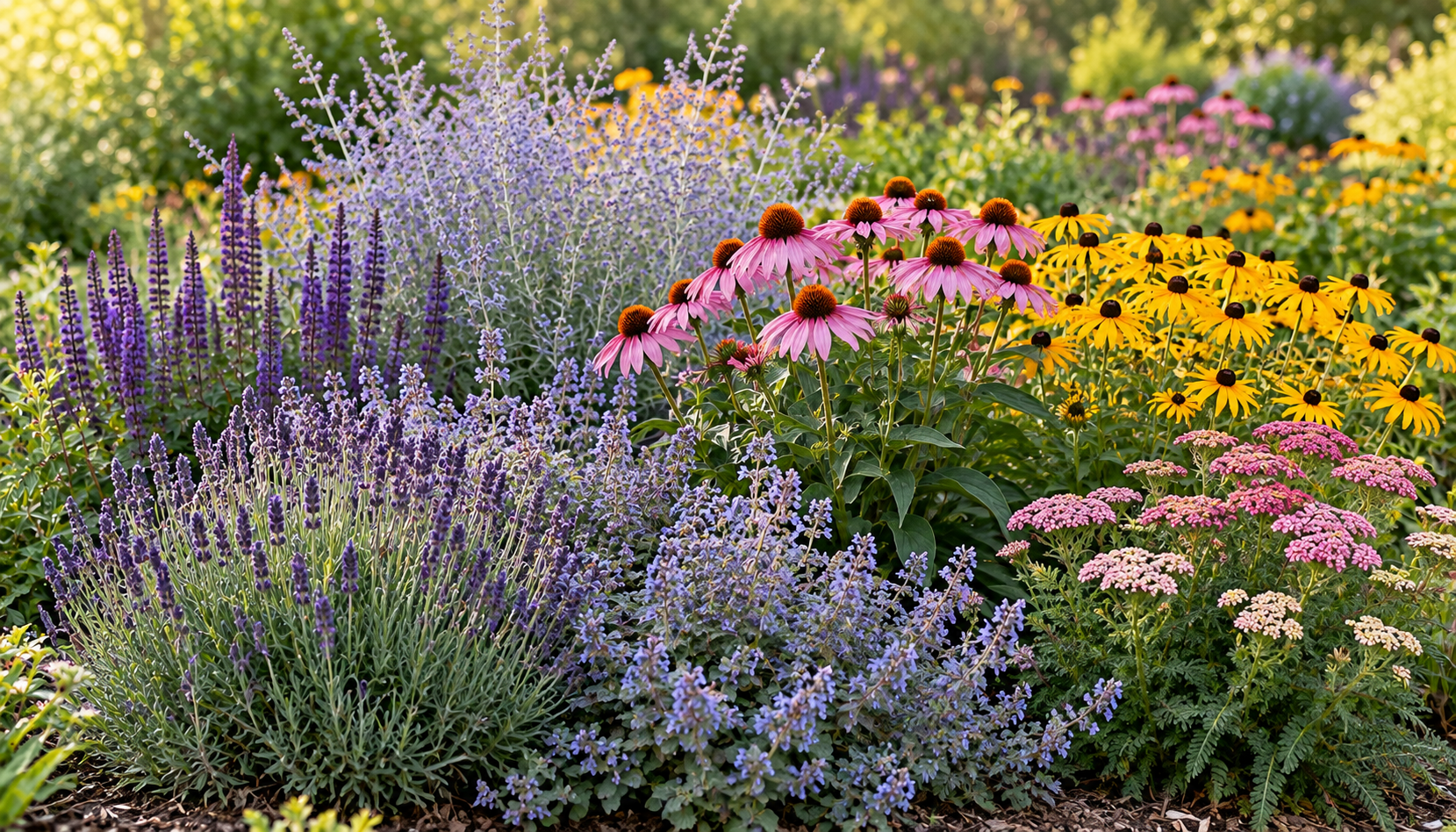
If deer visit your garden, you already know how much they can eat in a single night. Hostas stripped to stalks, daylily buds gone just before they open, tulips vanished. The good news is that deer are picky eaters, and there are plenty of beautiful perennials they usually leave alone. Planting those, and saving the favorites for protected spots, is the most reliable and least expensive way to garden where deer are common.
The perennials below are chosen because deer consistently avoid them across most of North America, according to gardeners and university extension ratings. They cover sun and shade, spring through fall, and a range of heights, so you can build a full border with them.
Quick Answer
The most reliable deer-resistant perennials include lavender, catmint, Russian sage, salvia, peony, coneflower, black-eyed Susan, yarrow, bee balm, Siberian iris, allium and lamb’s ear for sun, and bleeding heart, astilbe and hellebore for shade. Deer tend to avoid plants with strong scents, fuzzy or rough leaves, or toxic sap. No plant is completely deer proof, since hungry deer will eat almost anything.
What Makes a Perennial Deer Resistant
Deer browse by smell and texture, and a few traits put them off. Strongly aromatic plants, such as lavender, catmint, salvia and Russian sage, are rarely touched because their oils taste bitter and mask the scent of other food. Fuzzy, hairy or rough leaves, like those of lamb’s ear, coneflower and black-eyed Susan, are unpleasant to chew. Plants with toxic or irritating compounds, including hellebore, bleeding heart and peony, are avoided because deer learn to associate them with an upset stomach. Tough, fibrous or grassy foliage is also low on the menu.
Resistance is never absolute. Deer habits vary by region and season, and a hungry herd in a hard winter or a dry summer will sample almost anything. Young plants and tender spring shoots are the most vulnerable, even on species deer usually ignore.
Lavender
Lavandula angustifolia
- Zones 5 to 9
- Light Full sun
- Height 1 to 3 ft
Lavender’s intensely fragrant foliage and flowers make it one of the most deer-proof plants you can grow; deer and rabbits almost never touch it. Its silver leaves and purple spikes bloom in early summer. The one thing lavender demands is sharp drainage, so plant it in lean, sandy or gravelly soil or a raised bed, and never let the roots stay wet.
Catmint
Nepeta × faassenii
- Zones 3 to 8
- Light Full sun to part shade
- Height 1 to 3 ft
Catmint forms soft mounds of gray-green, aromatic leaves covered in lavender-blue flowers from late spring through summer. Deer and rabbits avoid its minty scent, while bees love it. Shear it back by about half after the first flush and it will bloom again. It is one of the toughest, longest-blooming perennials for a deer-prone border.
Russian Sage
Salvia yangii (formerly Perovskia atriplicifolia)
- Zones 4 to 9
- Light Full sun
- Height 3 to 4 ft
Russian sage produces airy clouds of lavender-blue flowers on silvery stems from midsummer into fall. Its pungent, aromatic foliage keeps deer away, and it thrives in heat, drought and poor soil. Leave the stems standing over winter and cut them back in spring once new growth appears.
Salvia
Salvia nemorosa
- Zones 4 to 8
- Light Full sun
- Height 1 to 3 ft
Perennial salvia’s upright spikes of violet, blue, pink or white flowers open in late spring, and its aromatic, slightly fuzzy leaves discourage both deer and rabbits. Cut the flower stems back by half after the first bloom and it will flower again from midsummer into fall. ‘May Night’ and ‘Caradonna’ are two of the most reliable varieties.
Peony
Paeonia
- Zones 3 to 8
- Light Full sun
- Height 2 to 3 ft
Deer rarely bother peonies, likely because the plants contain compounds that make them unpalatable. That makes peonies one of the few big, showy, fragrant flowers you can grow safely in deer country. They bloom in late spring and can live for 50 years or more. Plant them in full sun with the eyes no more than 2 inches deep.
Coneflower
Echinacea purpurea
- Zones 3 to 9
- Light Full sun
- Height 2 to 4 ft
Coneflower’s rough, hairy leaves and stiff stems are unappealing to deer, although hungry deer may nibble the flowers in a hard year. This North American native blooms from early summer into fall, feeds bees and butterflies, and leaves seed heads for goldfinches. It thrives in heat, drought and lean soil.
Black-Eyed Susan
Rudbeckia fulgida
- Zones 3 to 9
- Light Full sun
- Height 1.5 to 3 ft
Black-eyed Susan’s bristly, hairy foliage keeps deer at a distance. Its golden flowers light up the garden from midsummer until frost, and it tolerates clay, drought and heat. Choose Rudbeckia fulgida varieties such as ‘Goldsturm’ for a long-lived perennial clump.
Yarrow
Achillea millefolium
- Zones 3 to 9
- Light Full sun
- Height 1 to 3 ft
Yarrow’s feathery, strongly scented foliage is avoided by deer and rabbits. Flat clusters of flowers in white, yellow, pink, red and terracotta bloom from early summer into fall and attract a wide range of pollinators. It thrives in poor, dry soil and can spread quickly in rich soil, so give it a lean spot.
Bee Balm
Monarda didyma
- Zones 4 to 9
- Light Full sun to part shade
- Height 2 to 4 ft
Bee balm is a member of the mint family with a strong, spicy fragrance that deer dislike. Its shaggy red, pink, purple or white flowers bloom in midsummer and are magnets for hummingbirds and bees. Choose mildew-resistant varieties, give plants good air circulation and keep the soil evenly moist.
Siberian Iris
Iris sibirica
- Zones 3 to 8
- Light Full sun to part shade
- Height 2 to 3 ft
Deer generally avoid irises, and Siberian iris is one of the toughest. Its slender, grassy leaves stay attractive all season, and its blue, purple, white or yellow flowers bloom in late spring alongside peonies. It tolerates wet soil better than bearded iris and has few pest problems.
Allium
Allium spp.
- Zones 4 to 8
- Light Full sun
- Height 1 to 4 ft
Ornamental onions are left alone by deer, rabbits and rodents thanks to their oniony scent. Their globe-shaped purple, pink or white flower heads float above the border in late spring and early summer. Plant the bulbs in fall among perennials such as catmint and salvia, which hide the alliums’ leaves as they fade.
Lamb’s Ear
Stachys byzantina
- Zones 4 to 8
- Light Full sun
- Height 12 to 18 in
The thick, woolly silver leaves of lamb’s ear are soft to the touch but unpleasant to chew, so deer pass them by. It makes a bright, low groundcover or edging plant. It needs well-drained soil and can rot in humid, wet conditions; ‘Helene von Stein’ is a large-leaved variety that rarely flowers and holds up well.
Bleeding Heart
Lamprocapnos spectabilis
- Zones 3 to 9
- Light Part to full shade
- Height 2 to 3 ft
Bleeding heart contains compounds that deer avoid, which makes it one of the best flowering choices for a shady garden in deer country. Its arching stems of heart-shaped pink or white flowers bloom in spring. The plant often goes dormant by midsummer, so pair it with ferns or other shade perennials that will fill the gap.
Astilbe
Astilbe spp.
- Zones 3 to 8
- Light Part shade
- Height 1 to 4 ft
Astilbe’s feathery plumes of pink, red, lavender or white rise above ferny foliage in early to midsummer. Deer usually leave it alone, which makes it a welcome alternative to hostas in shady beds. It needs consistently moist soil and suffers in drought, so water it during dry spells.
Hellebore
Helleborus × hybridus
- Zones 4 to 9
- Light Part to full shade
- Height 1 to 1.5 ft
Hellebores are among the most deer-resistant perennials of all, since every part of the plant is toxic. Their nodding, long-lasting flowers in white, pink, plum and near-black open in late winter and early spring, when little else is blooming. The leathery, evergreen leaves look good most of the year.
Deer-Resistant Perennials at a Glance
Use this table to compare the plants above by hardiness zone, light and bloom season.
| Perennial | USDA zones | Light | Bloom time |
|---|---|---|---|
| Lavender | 5 to 9 | Full sun | Early to midsummer |
| Catmint | 3 to 8 | Full sun to part shade | Late spring to late summer |
| Russian sage | 4 to 9 | Full sun | Midsummer to fall |
| Salvia | 4 to 8 | Full sun | Late spring to fall |
| Peony | 3 to 8 | Full sun | Late spring |
| Coneflower | 3 to 9 | Full sun | Early summer to fall |
| Black-eyed Susan | 3 to 9 | Full sun | Midsummer to fall |
| Yarrow | 3 to 9 | Full sun | Early summer to fall |
| Bee balm | 4 to 9 | Full sun to part shade | Midsummer |
| Siberian iris | 3 to 8 | Full sun to part shade | Late spring |
| Allium | 4 to 8 | Full sun | Late spring to early summer |
| Lamb’s ear | 4 to 8 | Full sun | Foliage all season |
| Bleeding heart | 3 to 9 | Part to full shade | Spring |
| Astilbe | 3 to 8 | Part shade | Early to midsummer |
| Hellebore | 4 to 9 | Part to full shade | Late winter to spring |
How to Plan a Deer-Resistant Border
A border built from deer-resistant perennials can bloom from late winter to frost. Start the season with hellebores in shade, followed by bleeding heart, alliums, Siberian iris and peonies in late spring. Salvia and catmint carry the color into early summer, and lavender, astilbe, yarrow and bee balm take over as the weather warms. Coneflower, black-eyed Susan and Russian sage finish the year, blooming from midsummer until frost.
Mix textures as well as flowers. The silver foliage of lavender, lamb’s ear and Russian sage brightens a sunny bed, while the grassy leaves of Siberian iris and the ferny foliage of astilbe add contrast in part shade. Repeat a few plants in groups of three or five through the border for a unified look, and place the most aromatic plants, such as catmint and lavender, along paths and bed edges where deer, and people, brush past them first.
Perennials Deer Love to Eat
Knowing what deer target is as useful as knowing what they avoid. Hostas and daylilies are at the top of the list, followed by garden phlox, tulips, hydrangeas and many roses. These plants are still worth growing, but in deer country they belong close to the house, inside a fence or in containers on a deck. If you already grow them in open beds, surround them with deer-resistant plants, which can help screen them from browsing.
How to Protect Your Garden from Deer
Deer-resistant plants are the foundation of a deer-proof garden, but a few other steps make them even more effective. Fencing is the only truly reliable barrier; deer can clear a fence up to about 8 feet tall, so shorter fences need to be doubled or angled outward. Repellent sprays based on egg, garlic or hot pepper work well in light deer pressure, especially if you reapply them after rain and rotate products so deer do not get used to one scent.
Protect young plants in their first season with a ring of chicken wire or netting, since tender new growth is eaten even on resistant species. Planting deer-resistant perennials around the edges of your beds, where deer enter first, also helps discourage them from exploring further.
Frequently Asked Questions
These are the questions gardeners ask most about deer-resistant perennials.
Are Any Perennials Completely Deer Proof?
No. Deer-resistant means deer usually avoid a plant, not that they never eat it. In a hard winter, a drought or a year with a large deer population, deer will sample almost anything. Strongly aromatic and toxic plants, such as lavender and hellebore, come closest to being deer proof.
Do Deer Eat Coneflowers?
Rarely. Coneflowers’ rough, hairy leaves make them unappealing, although hungry deer sometimes nibble the flowers. Rabbits are more likely to eat young coneflower shoots in spring.
What Is the Most Deer-Resistant Perennial?
Lavender, catmint, Russian sage and hellebore are among the most consistently avoided perennials. The first three have strong aromatic oils, and hellebore is toxic in all its parts.
Which Deer-Resistant Perennials Grow in Shade?
Bleeding heart, astilbe and hellebore are three of the best flowering perennials for shade in deer country. Ferns, lungwort and Japanese forest grass are also rarely damaged.
Do Deer-Resistant Plants Keep Deer out of the Garden?
Not on their own, but they help. Deer tend to browse less in gardens where most plants are unpalatable, and aromatic plants can help mask the scent of favorites nearby. For plants deer love, fencing or repellents are still needed.