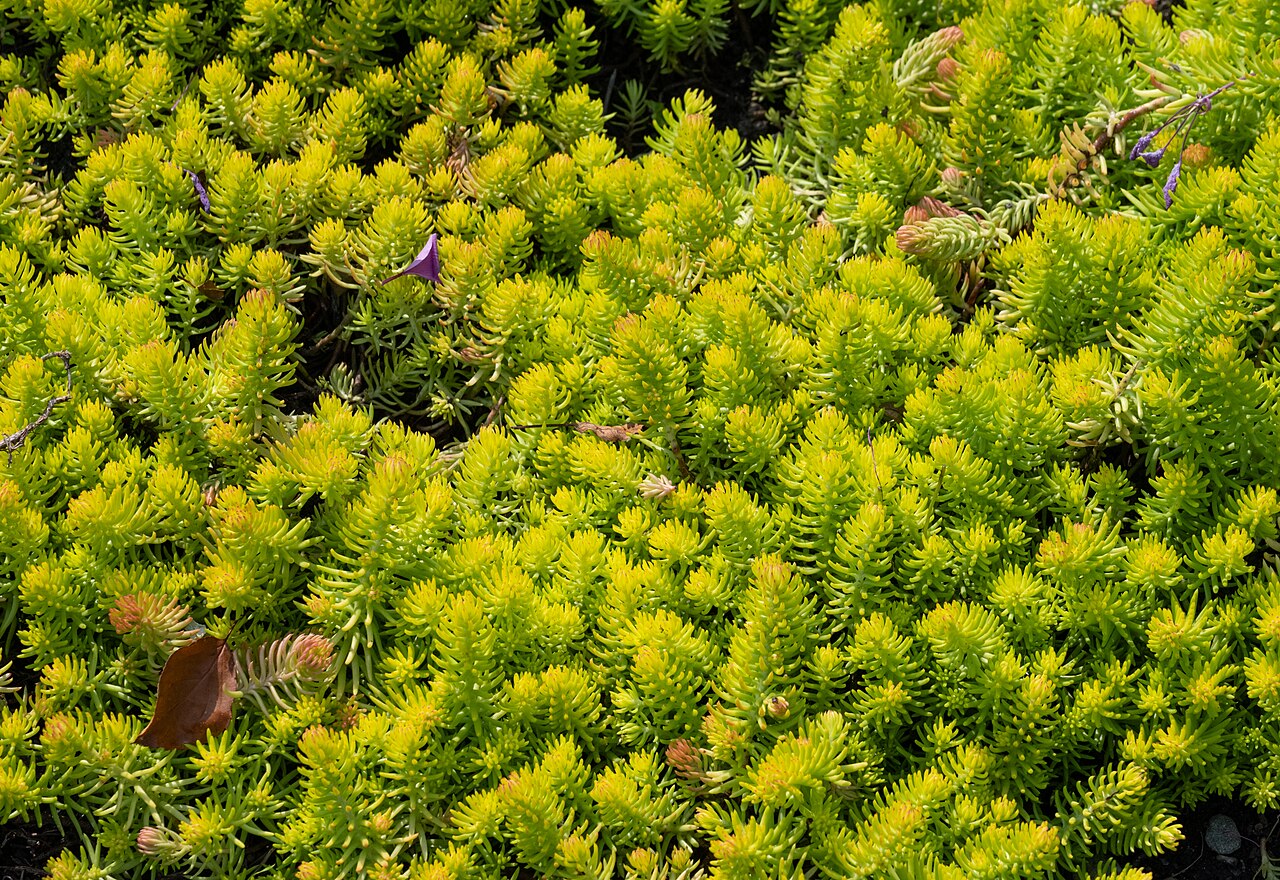
Sedum is one of the toughest and most useful perennials you can grow. Its thick, fleshy leaves store water, so it shrugs off heat, drought and poor soil that would finish off most garden plants. Tall, upright types carry broad heads of pink, red or white flowers from late summer into fall, when bees and butterflies are hungry for nectar. Low, creeping types spread into colorful mats that fill rock gardens, wall crevices, slopes and even green roofs.
Sedum is also known as stonecrop, a name that describes where many species grow in the wild: on rocky ground with little soil. That is the key to growing it well. Sedum thrives on neglect and suffers from kindness, and most problems come from soil that is too rich, too wet or too shady.
How Do You Grow Sedum?
Grow sedum (stonecrop) in full sun and lean, well-drained soil in USDA zones 3 to 9. Space upright types about 18 inches apart and creeping types about 12 inches apart, water only until established and skip fertilizer. Upright sedums bloom from late summer into fall. Leave the seed heads standing over winter and cut the old stems back in early spring when new growth appears at the base.
| Botanical name | Sedum and Hylotelephium spp. |
|---|---|
| Common names | Sedum, stonecrop, showy stonecrop, live-forever |
| USDA zones | 3 to 9 for most garden types |
| Sun | Full sun, at least 6 hours; creeping types tolerate light part shade |
| Height | 2 inches to 2 feet, depending on type |
| Spread | 1 to 2 feet |
| Bloom time | Late summer to fall (upright types); late spring to early summer (creeping types) |
| Grown for | Both flowers and foliage |
| Flower color | Pink, rose, red, white, yellow |
| Soil moisture | Dry to average, well drained |
| Deer | Resistant |
| Drought tolerance | Very high once established |
| Native range | Northern Hemisphere; most garden types from Europe and Asia |
| Pet toxicity | Generally considered non-toxic to dogs and cats |
| Maintenance | Low |
Types of Sedum
The genus Sedum once included hundreds of species of succulent plants. Botanists have since moved many of the best-known garden sedums into related genera, including Hylotelephium for the tall types and Phedimus and Petrosedum for some creeping ones. Nurseries and gardeners still call them all sedum, and for growing purposes they fall into two groups.
Upright Sedum
Upright or border sedums form clumps of thick, gray-green to purple stems 1 to 2 feet tall, topped in late summer by flat or domed heads of tiny star-shaped flowers. The flower buds appear in midsummer and look like heads of broccoli before they open, then age from pink or red to copper and rust in fall. The most familiar example is ‘Autumn Joy’, a hybrid of showy stonecrop (Hylotelephium spectabile) and orpine (Hylotelephium telephium). Upright sedums die back to the ground in winter and return from a crown of fat buds in spring.
Creeping Sedum
Creeping or groundcover sedums grow 2 to 6 inches tall and spread by trailing stems that root as they go. Many keep their leaves through winter, often turning red, bronze or purple in the cold. They bloom from late spring to early summer, depending on the species, with starry flowers in yellow, pink, red or white. Popular species include two-row stonecrop (Sedum spurium), orange stonecrop (Phedimus kamtschaticus), white stonecrop (Sedum album) and the chartreuse ‘Angelina’ (Petrosedum rupestre).
Native Sedums
A few sedums are native to North America. Woodland stonecrop (Sedum ternatum) grows in the eastern United States and, unusually for a sedum, prefers part shade and moist, rocky woodland soil. It makes a good native groundcover for shady rock gardens and slopes.
Where Sedum Grows Best
Most garden sedums are hardy in USDA zones 3 through 9, and many creeping types survive in zone 3 or even colder. They handle summer heat and humidity well, but they struggle in soggy soil at any temperature.
Give sedum full sun, at least 6 hours of direct light a day. In too much shade, upright sedums grow tall and weak and fall open in the middle of the clump, and creeping types become sparse and stop flowering. A few creeping species, including woodland stonecrop and two-row stonecrop, tolerate light shade.
Drainage matters more than anything else. Sedum grows best in lean, sandy, gravelly or rocky soil and tolerates poor, dry ground where little else survives. Heavy clay is acceptable only if it drains; otherwise, plant sedum on a slope, in a raised bed or in a mix amended with coarse sand or fine gravel. A pH of about 6.0 to 7.5 suits most types. Avoid adding rich compost or manure, which produces soft, floppy growth.
How to Plant Sedum
Plant potted sedum in spring after the last frost or in early fall at least six weeks before the ground freezes. Dig a hole as deep as the pot and about twice as wide, set the plant so the top of the root ball is level with the soil surface and backfill with the native soil. Water well after planting.
Space upright sedums about 18 inches apart and creeping types about 12 inches apart; creeping sedums will knit together into a solid mat within a season or two. Use gravel or no mulch at all around sedum rather than wood mulch, which holds moisture against the stems.
Growing Sedum from Cuttings
Sedum is one of the easiest perennials to propagate. Cut 3- to 4-inch stem tips in late spring or summer, remove the lower leaves and let the cuttings dry for a day. Stick them into a pot of gritty mix or directly into the garden and keep them lightly moist until new growth appears, usually within two to three weeks. Creeping sedums root from almost any piece of stem, and even single leaves of some species will form new plants. Sedum can be grown from seed, but named varieties do not come true, so cuttings and division are the usual methods.
Watering and Feeding
Water new plants about once a week through their first season if rain is scarce, letting the soil dry between waterings. Established sedum rarely needs extra water, even in long dry spells. Overwatering is far more dangerous than drought, since wet soil causes rot and soft, floppy growth.
Sedum needs no fertilizer in average garden soil. Extra nitrogen makes upright types grow tall and fall open. If your soil is extremely poor and sandy, a thin layer of compost in spring is enough.
Pruning, Cutting Back and Winter Care
Upright sedums hold their flower heads well into winter, and they are among the best perennials to leave standing. The dried heads turn dark brown, catch snow and provide seeds and shelter for birds and insects. Cut the old stems to the ground in early spring, as soon as you see new rosettes of leaves emerging at the base, and take care not to damage the new growth.
Creeping sedums need little pruning. Trim off faded flower stems after bloom to keep mats tidy, and shear back or pull out sections that spread beyond where you want them. Evergreen creeping types keep their foliage through winter and should not be cut back in fall.
The Chelsea Chop
To keep tall upright sedums compact and prevent them from flopping, cut the stems back by about half in late May or early June. The technique is known as the Chelsea chop, after the Chelsea Flower Show held in London in late May. The plants branch out, stay shorter and sturdier and bloom a little later with more, slightly smaller flower heads. You can cut back only the front stems of a clump to stagger the bloom.
Dividing Sedum
Upright sedums grow into wide clumps that eventually open up in the center and flop. Divide them every three to four years in spring, just as new growth appears. Dig up the clump, cut it into sections with a sharp spade or knife, making sure each piece has several buds and a good set of roots, and replant at the same depth. Creeping sedums can be divided at any time during the growing season by lifting and replanting rooted pieces of the mat.
Best Sedum Varieties
These varieties are reliable, widely available and suited to most sunny gardens. Choose upright types for late-season color in borders and creeping types for groundcover, edging and rock gardens.
‘Autumn Joy’
The classic upright sedum, ‘Autumn Joy’ grows about 2 feet tall with gray-green leaves and large flower heads that open pink in late summer and age to copper-red and rust. It was bred in Germany by the nurseryman Georg Arends, who named it ‘Herbstfreude’, and it remains one of the most popular perennials for fall color.
‘Matrona’
A sturdy upright variety about 18 to 24 inches tall with blue-green leaves edged in purple, dark red stems and soft pink flowers. Its strong stems make it less likely to flop than many older varieties.
‘Brilliant’
A selection of showy stonecrop with bright, rose-pink flower heads on plants about 18 inches tall. It blooms slightly earlier than ‘Autumn Joy’ and is a favorite of butterflies.
‘Purple Emperor’
Grown as much for its foliage as its flowers, ‘Purple Emperor’ has deep purple leaves on compact plants 12 to 15 inches tall, topped by dusky pink flowers in late summer. It makes a strong contrast with silver and chartreuse plants.
‘Angelina’
A creeping sedum with bright chartreuse to gold, needle-like foliage that turns orange and amber in winter. It grows about 4 to 6 inches tall and spreads quickly, making it a good choice for slopes, walls and containers.
‘Dragon’s Blood’
A variety of two-row stonecrop with round leaves that start green and deepen to burgundy, and rich red flowers in early summer. It forms a dense mat 4 to 6 inches tall and is one of the best creeping sedums for edging and rock gardens.
Companion Plants for Sedum
Upright sedums fill the late-season gap in sunny borders and pair well with plants that share their taste for sun and lean soil. Ornamental grasses such as little bluestem, switchgrass and prairie dropseed provide fine texture next to sedum’s bold leaves. Asters, Russian sage, coneflowers and black-eyed Susans bloom alongside it in late summer and fall. Creeping sedums combine well with thyme, dianthus, creeping phlox and hens and chicks in rock gardens, between paving stones and in dry walls.
Sedum for Pollinators
Upright sedums are one of the most important late-season nectar sources in many gardens. Their flat heads of tiny flowers are easy for bees, butterflies, hoverflies and other insects to feed from, and they bloom when many other perennials have finished. In late summer, a clump of ‘Autumn Joy’ or showy stonecrop in full bloom is often covered with honeybees, bumblebees and butterflies. Creeping sedums feed pollinators earlier in the season.
Common Sedum Problems
Sedum has few serious pests or diseases. Nearly every problem traces back to too much water, fertilizer or shade.
Flopping and Splitting
Upright sedums that fall open in the center are usually growing in soil that is too rich or too wet, in too much shade or in a clump that needs dividing. Move them to a sunnier, leaner spot, stop fertilizing, divide older clumps and use the Chelsea chop in late spring to keep new growth compact.
Root and Crown Rot
Sedum rots in soil that stays wet, especially in winter. Stems turn black and mushy at the base and collapse. Improve drainage with grit or a raised bed, stop watering established plants and replant healthy stem cuttings if the crown has rotted.
Pests
Aphids and mealybugs occasionally cluster on stems and flower buds, and slugs and snails can chew young shoots in spring. A strong spray of water knocks off aphids. Deer usually leave sedum alone, although rabbits and deer may nibble the tender new growth of upright types in spring.
Creeping Sedum Spreading Too Far
Some creeping sedums, especially goldmoss stonecrop (Sedum acre) and white stonecrop, spread aggressively and can root from tiny fragments. Plant them where they have room or where they are contained by paving or walls, and pull out unwanted pieces promptly.
Growing Sedum in Containers
Sedum is an excellent container plant, especially for hot, sunny spots where other plants dry out. Use a pot with drainage holes and a gritty mix, such as a cactus and succulent potting mix or regular potting mix blended with about one third coarse sand or perlite. Water only when the mix is dry. Creeping sedums spill over the edges of pots and troughs, while compact upright types like ‘Purple Emperor’ work as centerpieces. In zones colder than 5, move pots of upright sedum to a sheltered spot or unheated garage for winter.
Frequently Asked Questions
These are the questions gardeners ask most about sedum.
Is Sedum a Succulent?
Yes. Sedum is a succulent that stores water in its thick leaves and stems. Unlike most succulents, many sedums are fully hardy perennials that survive winters down to USDA zone 3.
Does Sedum Spread?
Creeping sedums spread by rooting stems and can cover 1 to 2 feet or more in a few years. Upright sedums grow into slowly widening clumps but do not run.
Why Is My Sedum Falling Over?
Upright sedum falls over when it grows in soil that is too rich or wet, in too much shade or in an old clump that needs dividing. Grow it in full sun and lean soil, and cut stems back by half in late May to keep them compact.
Should You Cut Back Sedum in the Fall?
No. Leave upright sedum standing over winter for its seed heads and winter interest, then cut it back in early spring when new growth appears at the base. Evergreen creeping sedums should not be cut back in fall.
Can Sedum Grow in Shade?
Most sedums need full sun and grow weak and floppy in shade. Woodland stonecrop and two-row stonecrop are the best choices for light or part shade.