How Do You Plant Perennials?
To plant a potted perennial, dig a hole at least twice as wide as the pot and just as deep, loosen any circling roots, and set the plant so its crown sits level with the surrounding soil. Backfill, firm gently, water deeply and add 2 to 3 inches of mulch kept off the stems. Bare-root perennials go in a wide hole over a small mound of soil, with the crown no more than 1 to 2 inches below the surface.
Planting a perennial takes ten minutes, but those minutes decide how the plant grows for years. Most failures in the first season trace back to a few avoidable mistakes: setting the crown too deep, leaving pot-bound roots circling, planting into heavy wet soil, or letting a new plant dry out. This guide walks through preparing the bed, planting container-grown and bare-root perennials step by step, getting the depth right for different plants, and caring for them through their first season.
Prepare the Bed Before You Plant
Perennials stay in the same spot for years, so the soil you give them on planting day is the soil they live in. Time spent preparing a bed pays off more than anything you do afterward.
Start by clearing the area of grass and weeds, roots and all, since perennial weeds like quackgrass and bindweed are nearly impossible to remove once they weave through a planted bed. Then loosen the soil and work in organic matter. Colorado State University Extension recommends mixing compost or other organic matter into the top 12 inches of soil, at about 3 cubic yards per 1,000 square feet, which works out to a layer roughly an inch thick spread over the bed before digging. Clemson Extension recommends digging beds 8 to 10 inches deep and adding at least 2 inches of composted bark or leaf mold to clay soils to improve drainage.
If you are planting just a few perennials into an existing bed, you do not need to dig the whole area. Loosen a wide circle around each planting spot and mix a few handfuls of compost into the soil you remove.
Drainage matters most of all. If water stands in a planting hole for more than a few hours after rain, choose plants that tolerate wet soil, raise the bed, or pick another spot. Very few perennials survive long in soil that stays waterlogged, especially in winter.
What You Need
You do not need much for planting perennials. A spade or garden fork loosens soil and digs holes, and a hand trowel handles small plants and tight spaces. Keep a bucket of compost nearby for mixing into planting holes, a watering can or hose with a gentle spray, and mulch such as shredded bark, shredded leaves or pine straw. For bare-root plants, add a bucket of water for soaking the roots.
How to Plant a Container-Grown Perennial
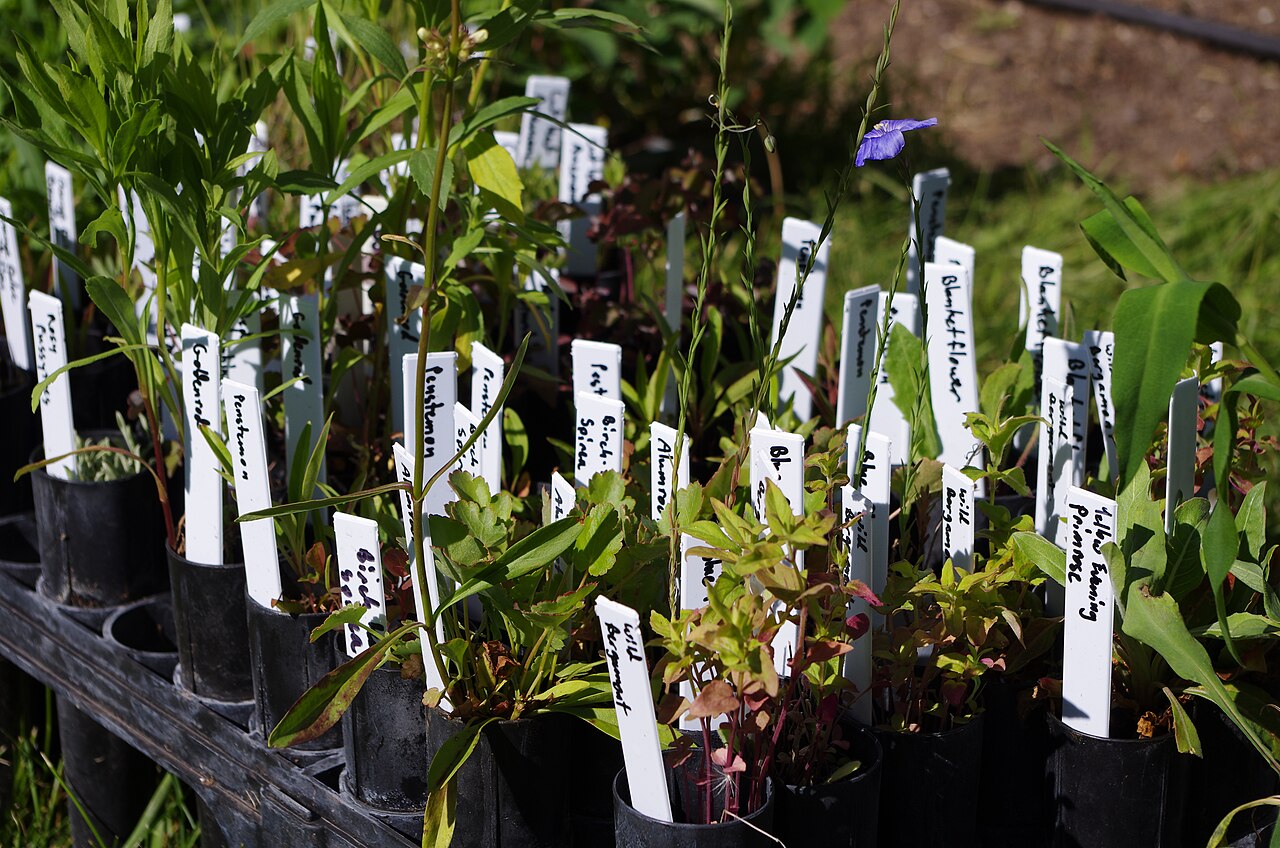
Container-grown perennials, sold in pots at garden centers, are the easiest to plant and can go in any time during the growing season. Follow these steps for each plant.
Water the Pot First
Water the plant in its pot an hour or so before planting. A moist root ball slides out of the container more easily, holds together better and recovers faster than a dry one. If the potting mix has dried out completely, set the pot in a bucket of water until bubbles stop rising.
Dig a Wide, Shallow Hole
Iowa State University Extension recommends digging a hole at least twice as wide as the container and only as deep as the soil in the pot. In poor or compacted soil, dig three to four times as wide and mix compost into the soil you set aside. Roots grow outward far more than downward, so width matters more than depth. Keep the bottom of the hole firm rather than loosening it deeply, which can let the plant settle too low as the soil sinks.
Remove the Plant and Loosen the Roots
Squeeze the sides of the pot or run a knife around the inside edge, then tip the plant out while supporting the base of the stems. Never pull a plant out by its stems. If roots circle the outside of the root ball, tease them apart with your fingers so they point outward. For badly pot-bound plants with a dense mat of roots, make three or four shallow vertical cuts down the sides of the root ball with a knife. Roots left circling tend to keep growing in circles instead of spreading into the surrounding soil.
Set the Crown at Soil Level
Place the plant in the hole so the crown, the point where the stems meet the roots, sits level with the surrounding soil, at the same depth it grew in the pot. Lay a stick or tool handle across the hole to check. Planting too deep is the most common planting mistake. Soil piled against the crown holds moisture there and can cause the plant to rot, while a crown set too high dries out and is easily heaved out of the ground by frost.
Backfill and Firm the Soil
Fill in around the root ball with the soil you removed, mixed with compost if the native soil is poor. Firm it gently with your hands to remove large air pockets, but do not stamp it down hard, which compacts the soil.
Water Deeply
Water slowly and thoroughly until the soil around the root ball is soaked. This settles the soil around the roots and removes remaining air pockets. If the soil sinks and exposes the top of the root ball, add a little more soil around it.
Mulch Around, Not Against, the Plant
Spread 2 to 3 inches of mulch over the surrounding soil to hold moisture and suppress weeds, keeping it an inch or two away from the stems. Mulch piled against the crown holds moisture and invites rot, the same problem as planting too deep.
How to Plant a Bare-Root Perennial
Bare-root perennials are sold dormant, with little or no soil around the roots, usually by mail-order nurseries in early spring. They cost less than potted plants and establish well if planted promptly.
If you cannot plant right away, Iowa State University Extension recommends storing bare-root plants at around 40°F, in a refrigerator, unheated garage or root cellar, with their packing material kept as damp as a wrung-out sponge. Before planting, soak the roots in a bucket of water for 30 to 60 minutes and trim off any broken or mushy roots.
Dig a hole two to two and a half times wider than the spread of the roots. Build a cone-shaped mound of soil in the center, set the plant on top and drape the roots down the sides so they spread outward. Adjust the height of the mound so the crown or buds sit no more than 1 to 2 inches below the surrounding soil. Backfill, firm gently and water thoroughly. New growth usually appears within 2 to 4 weeks, depending on the weather.
Planting Depth for Different Perennials
Most perennials share the same depth rule, but a few common plants need special attention. Getting depth wrong is a leading reason plants fail to bloom or rot in their first year.
| Plant Type | Planting Depth |
|---|---|
| Container-grown perennials | Crown level with the soil, same depth as in the pot |
| Bare-root perennials | Crown or buds no more than 1 to 2 inches below the soil |
| Peonies (herbaceous and Itoh) | Eyes no more than 2 inches deep, about 1 inch in zones 7 and 8 |
| Drought-tolerant plants such as lavender and Russian sage | Crown level or slightly above in heavy soil |
| Groundcovers such as creeping phlox and creeping sedum | Crown level, roots spread wide and shallow |
Peonies are the best-known example of depth mattering. Planted with their eyes buried deeper than about 2 inches, they often grow leaves for years without flowering. Plants from dry climates do better set slightly high in heavy soil, so water drains away from the crown instead of pooling around it.
Caring for Perennials in Their First Season
A new perennial depends on its original root ball until fresh roots grow into the surrounding soil, so the first season is when it needs the most attention.
Water is the priority. Iowa State University Extension advises keeping newly planted perennials well watered through their entire first growing season, checking once or twice a week and watering when the soil around the roots is dry. Clemson Extension notes that most perennials need about 1 to 1 1/2 inches of water a week from rain or watering. Water deeply and less often rather than giving frequent light sprinkles, which encourage shallow roots.
Check the root ball itself, not just the bed. Potting mix dries faster than garden soil, so a new plant can wilt even when the surrounding ground still feels damp. Push a finger into the soil right next to the stems to check.
Go easy on fertilizer. Compost mixed into the planting hole gives most perennials all they need in the first year. Heavy feeding pushes soft, leafy growth at the expense of roots.
Expect slow progress. Many perennials put most of their first-year energy into roots, so they may look small and flower lightly. Gardeners describe the pattern as “the first year they sleep, the second year they creep, and the third year they leap,” and University of Georgia Extension uses the same saying to explain why patience and proper spacing matter.
Common Planting Mistakes
Most planting problems are easy to avoid once you know them. The most common is planting too deep, which smothers the crown and can cause rot or poor flowering. Close behind are leaving circling roots untouched, digging a narrow hole that roots struggle to grow out of, and piling mulch against the stems.
Planting into wet, sticky soil compacts it and leaves roots without air. Planting in the heat of a summer afternoon stresses a plant before it can take up water. And crowding plants to fill a bed quickly leads to competition for water, poor air movement and more disease within a couple of years. Space each plant for its mature size and fill gaps with annuals while the perennials grow in.
Frequently Asked Questions
Short answers to common questions about planting perennials.
Should I Add Fertilizer to the Planting Hole?
Usually not. Compost mixed into the backfill gives a gentle, slow supply of nutrients and improves the soil. Strong fertilizer in the hole can burn new roots and pushes leafy growth before the plant is established.
How Deep Should I Plant Perennials?
Plant container-grown perennials with the crown level with the soil, at the same depth they grew in the pot. Bare-root perennials go in with the crown no more than 1 to 2 inches below the surface, and peony eyes no deeper than 2 inches.
Should I Cut Off Flowers When Planting?
It helps but is not essential. Removing open flowers and buds at planting lets the plant put more energy into roots. For plants bought in full bloom that you want to enjoy, leave the flowers, but deadhead them as they fade.
How Often Should I Water New Perennials?
Water deeply right after planting, then every two or three days for the first couple of weeks in warm weather. After that, check once or twice a week and water whenever the soil around the roots is dry, through the whole first season.
Sources
- How to Plant Perennials, Iowa State University Extension and Outreach
- How to Plant Bare Root Perennials, Iowa State University Extension and Outreach
- Growing Perennials, Clemson Cooperative Extension Home and Garden Information Center
- Perennial Gardening, Colorado State University Extension
- Establishing Perennials in the Early Fall, University of Illinois Extension
- Landscape Basics: Success With Herbaceous Perennials, University of Georgia Cooperative Extension