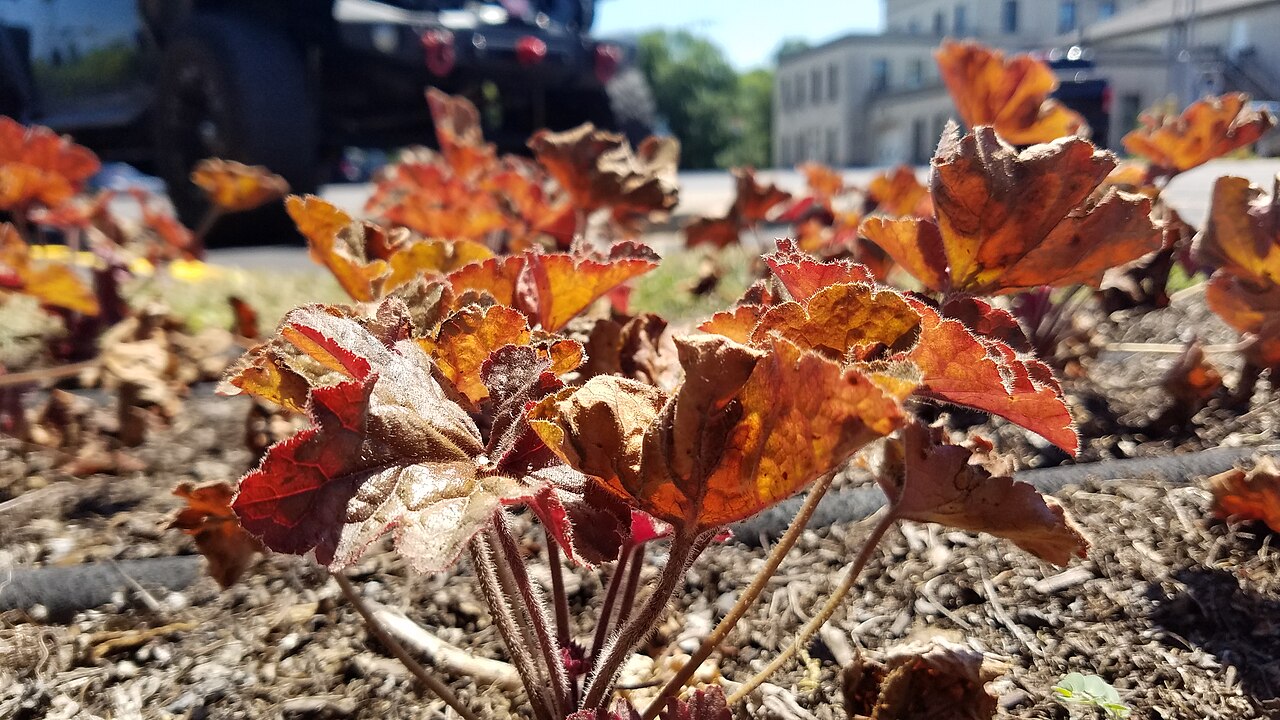
Coral bells are grown for their leaves. Few perennials offer as much color without relying on flowers: rounded, scalloped or ruffled mounds in purple, near black, burgundy, amber, peach, lime green, silver and every shade between, often veined or washed with a second color. Many keep their leaves through winter, and in late spring or summer they send up wiry stems of tiny bell-shaped flowers that hummingbirds visit.
Heuchera is native to North America, and the modern hybrids come from species that grow wild from the eastern woodlands to the mountains of the West. That background explains what they need: light shade, rich soil that drains well and steady moisture. Coral bells have one quirk that trips up many gardeners. Their crowns gradually rise out of the ground, and plants that are not reset every few years become woody and weak. Knowing that makes them long-lived and easy.
How Do You Grow Coral Bells?
Grow coral bells (Heuchera) in part shade and rich, moist, well-drained soil in USDA zones 4 to 9, spacing plants 12 to 18 inches apart with the crown level with the soil. Water during dry spells, mulch to keep roots cool and do not cut the foliage back in fall. Every 3 to 4 years, when the crowns become woody and rise above the soil, divide the plants and replant the youngest pieces deeper.
| Botanical name | Heuchera spp. and hybrids |
|---|---|
| Common names | Coral bells, alumroot, heuchera |
| USDA zones | 4 to 9; many varieties to zone 3 |
| Sun | Part shade, with morning sun; dark-leaved varieties take more sun in cool climates |
| Height | 6 to 18 inches in leaf; flower stems to about 2 feet |
| Spread | 12 to 24 inches |
| Bloom time | Late spring to early summer; Heuchera villosa types in late summer to fall |
| Grown for | Both foliage and flowers |
| Flower color | Red, pink, coral, white, cream, green |
| Soil moisture | Evenly moist, well drained, rich in organic matter |
| Deer | Resistant |
| Drought tolerance | Moderate once established |
| Native range | North America |
| Pet toxicity | Not toxic to dogs, cats or horses, according to the ASPCA |
| Maintenance | Low; divide every 3 to 4 years |
Types of Coral Bells
The genus Heuchera includes more than 40 species, all native to North America. Most coral bells sold today are hybrids bred for foliage color, and their parent species affect how well they handle sun, heat and cold. Four species matter most to gardeners.
Heuchera sanguinea
Native to the mountains of Arizona, New Mexico and northern Mexico, Heuchera sanguinea is the original coral bells, with bright red or coral-pink flowers on tall, slender stems above small green leaves. Varieties from this species and its hybrids are the best choice if you want flowers and hummingbirds rather than colorful leaves.
Heuchera americana
American alumroot grows wild in woodlands across the eastern United States. It has green leaves often marbled with silver and bronze, and small greenish flowers. ‘Dale’s Strain’, with silver-blue marbled leaves and purplish veins, is a popular selection, and the species is a parent of many foliage hybrids.
Heuchera micrantha
This western species from the Pacific Northwest has large, often ruffled leaves and airy sprays of tiny cream flowers. It is best known as the parent of ‘Palace Purple’, the variety that started the craze for colorful coral bells.
Heuchera villosa
Hairy alumroot is native to the southeastern United States and has large, soft, fuzzy leaves and late flowers in late summer and fall. It is by far the most tolerant of heat and humidity, and hybrids with villosa parentage, such as ‘Caramel’ and ‘Citronelle’, are the best choices for warm-summer gardens.
Heucherella and Foamflower
Heucherella is a hybrid between Heuchera and its close relative foamflower (Tiarella). It has deeply lobed or star-shaped leaves, often with dark central markings, and foamy spikes of white or pink flowers. It grows much like coral bells but spreads a little more by short runners.
Where Coral Bells Grow Best
Coral bells are hardy in USDA zones 4 through 9, and many varieties survive in zone 3. They grow best where summers are not too hot, although villosa hybrids handle heat and humidity well into the South.
Part shade is ideal for most varieties, with morning sun and shade during the hot afternoon, or bright filtered light under high trees. In cool northern gardens with moist soil, many coral bells take more sun, and dark purple and red leaves often color best with a few hours of direct light. Light-colored varieties, especially amber, peach and lime, scorch easily in strong sun. In deep shade, colors fade and plants become loose and leggy.
The soil should be rich in organic matter, evenly moist and well drained, with a slightly acidic pH of about 6.0 to 7.0. Coral bells dislike heavy clay and soil that stays wet in winter, which rots their crowns. On heavy ground, plant them on a slope or in a raised bed amended with compost.
How to Plant Coral Bells
Plant coral bells in spring or early fall, at least six weeks before the ground freezes. Loosen the soil and mix in 2 to 3 inches of compost. Dig a hole about twice as wide as the pot and set the plant so the crown, where the leaves emerge, is level with the soil surface. Backfill, firm gently and water thoroughly.
Space plants 12 to 18 inches apart, or up to 24 inches for large villosa hybrids. Coral bells look best in groups of three or more of one variety, or in a mix of complementary leaf colors. Spread 1 to 2 inches of shredded leaves, pine straw or fine bark around the plants to keep the roots cool and moist, keeping it away from the crown itself.
Watering and Feeding
Water coral bells weekly through their first season and during hot, dry weather afterward, soaking the root zone deeply. Established plants tolerate short dry spells, but they look their best and scorch less with steady moisture. Water at the base rather than over the leaves, and avoid keeping the soil soggy.
Coral bells need little fertilizer. A layer of compost in spring, or a light application of a balanced slow-release fertilizer as new growth begins, is enough. Too much nitrogen produces soft, floppy growth and weaker leaf color.
Deadheading, Cleanup and Winter Care
Cut the flower stems back to the base after the flowers fade. On flowering types such as Heuchera sanguinea varieties, removing faded stems encourages more flowers over a longer season. On foliage types, many gardeners cut the flower stems off as soon as they appear to keep attention on the leaves.
Do not cut coral bells back in fall. Most varieties are evergreen or semi-evergreen and keep at least some of their leaves through winter, which protects the crown. In early spring, cut away leaves that are dead, torn or winter-burned, leaving the new growth in the center. Removing ragged foliage during the season also encourages fresh leaves.
In cold areas without reliable snow cover, a light mulch of evergreen boughs or shredded leaves after the ground freezes helps prevent winter burn and frost heaving, when repeated freezing and thawing pushes the shallow-rooted crowns out of the soil. Walk the beds in late winter and press any lifted plants back into place.
Dividing and Rejuvenating Coral Bells
As coral bells age, the crowns grow upward on thick, woody stems, leaving a bare stalk between the leaves and the soil. The clump becomes crowded, the center dies out and the plants are easily dried out or heaved by frost. Divide and replant them every three to four years, in spring or early fall.
Dig up the whole clump and break or cut it into pieces, each with a rosette of leaves and some roots. Discard the old, woody center. Replant the young divisions deeper than before, so the bare woody stem is buried and only the leaves sit above the soil, and water well. New roots will form along the buried stem. If you do not want to divide, you can simply lift a leggy plant and replant it deeper, or add a layer of compost around the exposed crowns.
Best Coral Bells Varieties
There are hundreds of named varieties, and new ones appear every year. These have stood the test of time and cover the main leaf colors and growing conditions.
‘Palace Purple’
A selection of Heuchera micrantha with large, deep bronze-purple leaves and sprays of tiny cream flowers, about 8 to 12 inches tall in leaf. It was named Perennial Plant of the Year in 1991 by the Perennial Plant Association and remains one of the toughest purple coral bells.
‘Obsidian’
One of the darkest coral bells, with glossy, nearly black leaves that hold their color through the season. It makes a striking contrast with lime and silver plants and tolerates more sun than light-colored varieties.
‘Caramel’
A villosa hybrid with large, soft leaves in apricot, amber and caramel, turning more gold in summer. It is one of the most heat- and humidity-tolerant coral bells and a good choice for southern gardens.
‘Citronelle’
Another heat-tolerant villosa hybrid, with bright lime-green to chartreuse leaves that light up shady corners. Give it shade from afternoon sun to prevent scorching.
‘Dale’s Strain’
A seed strain of the native Heuchera americana with silver-blue leaves marbled and veined in purple and green. It is tough, long-lived and well suited to naturalistic and native plantings.
‘Firefly’
A flowering type with small green leaves and tall stems of fragrant, bright scarlet flowers in late spring and early summer. It is one of the best coral bells for attracting hummingbirds.
Companion Plants for Coral Bells
Coral bells are among the most useful foliage plants for combining with other shade perennials. Purple and near-black varieties contrast well with the gold and chartreuse leaves of hostas, Japanese forest grass and golden creeping Jenny. Lime and amber varieties brighten plantings of ferns, astilbe, brunnera and hellebores. Foamflower, lungwort, bleeding heart and spring bulbs extend the season. Along a shady path or at the front of a border, a row of coral bells in two or three colors makes a colorful edging all year.
Coral Bells for Hummingbirds and Pollinators
The tubular red, coral and pink flowers of Heuchera sanguinea and its hybrids are a favorite of hummingbirds, and bees visit the flowers of many types. If attracting wildlife is a goal, choose flowering varieties rather than those bred mainly for leaf color, and leave the flower stems in place until they fade.
Common Coral Bells Problems
Coral bells are generally healthy and ignored by deer and rabbits, which dislike the tannins in the leaves. Most problems come from aging crowns, wet soil or too much sun.
Woody Crowns and Frost Heaving
Plants that lift out of the ground, sit on bare woody stems or die out in the center need dividing and replanting deeper. This is the most common reason coral bells decline after a few years, and it is easily fixed.
Root and Crown Rot
Soggy soil, especially in winter, causes the crown to rot and the plant to collapse. Improve drainage, avoid piling mulch against the crown and replant healthy pieces in better-drained soil.
Leaf Scorch
Brown, crispy leaf edges mean too much sun, too little water or both. Water more deeply during hot weather and move light-colored varieties to a shadier spot.
Black Vine Weevil
Adult weevils chew notches in the leaf edges, but their white, C-shaped larvae do the real damage by eating the roots. A plant that wilts in moist soil and lifts from the ground with few roots may be infested. Remove badly affected plants, and treat the soil with beneficial nematodes, which attack the larvae, in spring or late summer.
Leaf Diseases
Powdery mildew, rust and bacterial leaf spot can appear in crowded, humid plantings. Give plants room for air to circulate, water at the base and remove affected leaves.
Growing Coral Bells in Containers
Coral bells are excellent container plants, adding color to shady pots from spring through fall and often into winter. Use a pot with drainage holes and a quality potting mix, and water when the top inch of mix feels dry. Combine them with ferns, begonias, impatiens or trailing plants for shade, or grow a single variety in a simple pot. In zones colder than 6, move pots to a sheltered spot or unheated garage for winter, or plant them in the garden in fall.
Frequently Asked Questions
These are the questions gardeners ask most about coral bells.
Are Coral Bells Perennials?
Yes. Coral bells are perennials hardy in USDA zones 4 to 9, and many survive in zone 3. Most keep some of their leaves through winter and return each spring.
Do Coral Bells Like Sun or Shade?
Most prefer part shade, with morning sun and afternoon shade. Dark-leaved varieties and villosa hybrids tolerate more sun, especially in cool climates, while amber, peach and lime varieties scorch in strong sun.
Why Are My Coral Bells Dying?
The most common causes are woody crowns that have risen out of the soil, wet soil that rots the crown and black vine weevil larvae eating the roots. Dividing and replanting deeper fixes the first; better drainage fixes the second.
Should You Cut Back Coral Bells in the Fall?
No. Leave the foliage over winter to protect the crown, then trim away damaged or dead leaves in early spring.
Are Coral Bells Toxic to Dogs?
No. The ASPCA lists coral bells as non-toxic to dogs, cats and horses.
Sources
- Heuchera or Coral Bells, Iowa State University Extension and Outreach
- Heuchera, Clemson Cooperative Extension Home and Garden Information Center
- Heuchera Hybrids, UC Master Gardeners of Sonoma County
- Coral Bells, ASPCA Toxic and Non-Toxic Plants List