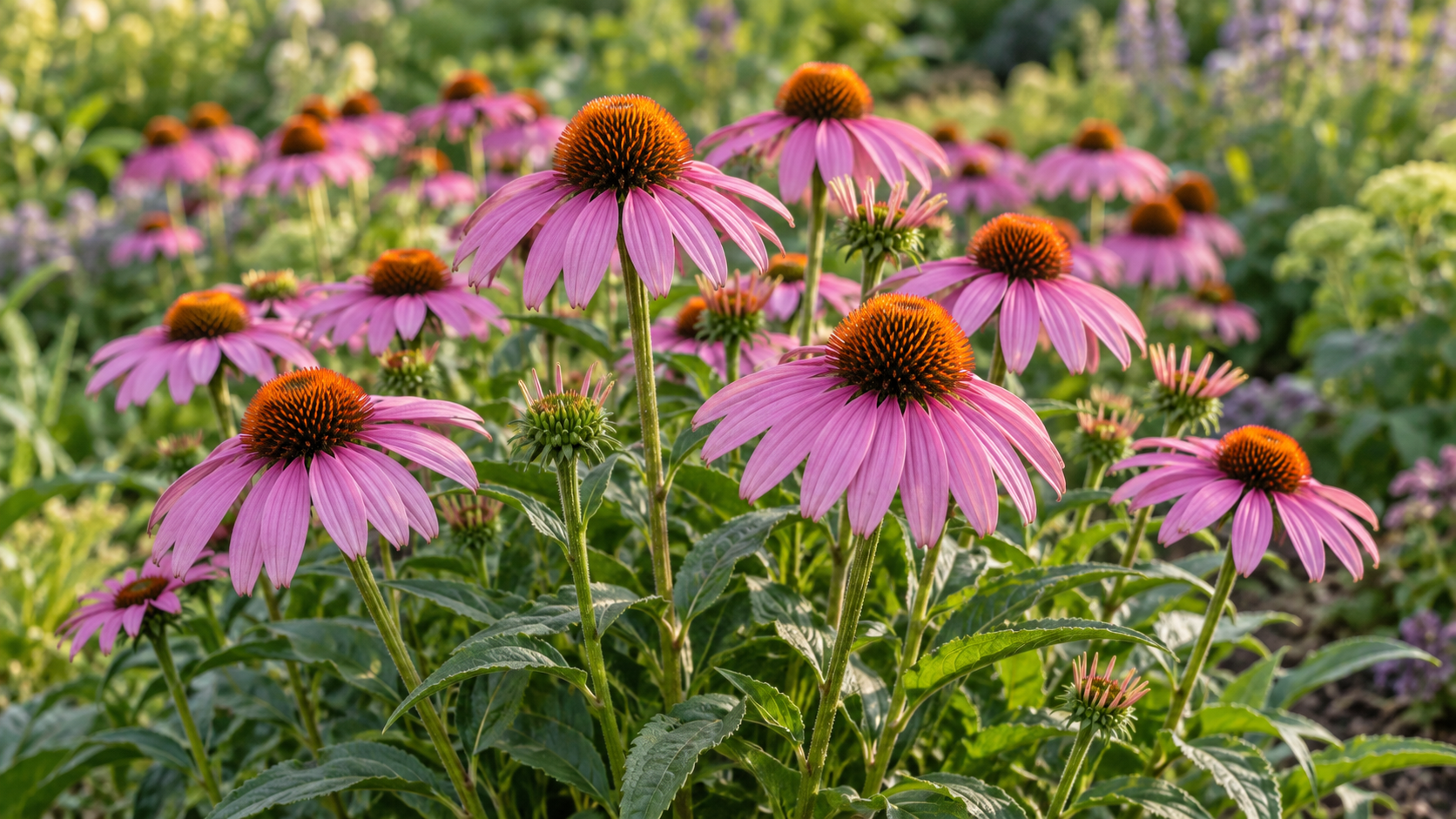
Coneflowers are the workhorses of the sunny perennial border. Native to the prairies and open woodlands of central and eastern North America, they bloom for weeks in summer with daisy-like flowers held around a spiky, domed center, the cone that gives them their name. They shrug off heat, drought and poor soil, deer usually leave them alone, and their flowers feed bees and butterflies in summer and goldfinches in fall. Few perennials give back as much for as little work.
The classic purple coneflower is one of the most dependable plants you can grow. Many of the newer hybrids in orange, red and double forms are showier but shorter lived, so it pays to know what you are buying. Most coneflower trouble comes down to two things: soil that stays wet in winter, and choosing a variety that was never meant to last.
Quick Answer
Plant coneflowers (Echinacea) in full sun and well-drained soil in USDA zones 3 to 9, spacing them 18 to 24 inches apart in spring or early fall. Water weekly the first season, then only in long droughts, and skip fertilizer. They bloom from early summer into fall. Leave the seed heads standing over winter for birds, and cut the stems back in early spring.
| Botanical name | Echinacea spp. |
|---|---|
| Common names | Coneflower, purple coneflower, echinacea |
| USDA zones | 3 to 9 |
| Sun | Full sun to light part shade, at least 6 hours of direct sun |
| Height | 2 to 4 feet, depending on variety |
| Spread | 1.5 to 2 feet |
| Bloom time | Early summer to fall, peaking in midsummer |
| Grown for | Flowers |
| Flower color | Purple-pink, white, pink, orange, yellow, red, green |
| Soil moisture | Dry to average, well drained |
| Deer | Resistant |
| Drought tolerance | High once established |
| Native range | Central and eastern North America |
| Pet toxicity | Not considered toxic to dogs, cats or horses |
| Maintenance | Low |
Types of Coneflowers
The genus Echinacea includes about ten species, all native to North America. Most garden coneflowers come from just one of them, but a few others and a wave of hybrids have widened the color range considerably.
Purple Coneflower
Echinacea purpurea is the species most people grow and the parent of most named varieties. It forms a clump 2 to 4 feet tall with rough, dark green leaves and rosy purple petals around a coppery orange cone. It is long lived, tolerant of a wide range of soils and self-sows gently, so a planting tends to persist for many years.
Other Native Species
Pale purple coneflower (Echinacea pallida) has long, narrow, drooping petals and a slender, airy look. Narrow-leaved coneflower (Echinacea angustifolia) is a shorter prairie plant with a deep taproot that suits very dry soils. Yellow coneflower (Echinacea paradoxa), native to the Ozarks, is the only species with yellow petals and was the key to breeding the orange and red hybrids. These species are less common in garden centers but are well worth growing in naturalistic and pollinator plantings.
Hybrid Coneflowers
Since the early 2000s, breeders have crossed purple coneflower with yellow coneflower and other species to produce flowers in orange, red, yellow, coral and white, along with double forms that have a pompom of petals in place of the cone. They are striking, but many are shorter lived than the species, often lasting only two or three years. They also tend to need better drainage and a little more care to get through their first winter.
Where Coneflowers Grow Best
Coneflowers grow in USDA zones 3 through 9, which covers nearly all of the United States and the southern parts of Canada. They are at their best in hot, sunny sites where many perennials struggle.
Give them full sun, at least 6 hours of direct light a day. They tolerate light afternoon shade, especially in the South, but in too much shade the stems stretch, flop and produce fewer flowers. Good air circulation helps prevent powdery mildew, so avoid crowding them against walls or dense shrubs.
Soil matters more than fertility. Coneflowers grow well in average or even poor soil, including clay, as long as water drains away. What kills them is soil that stays wet, especially in winter, when soggy ground rots the crown. Rich, heavily amended beds and frequent watering produce lush, floppy plants that are more prone to disease. A pH anywhere from about 6.0 to 7.5 is fine.
How to Plant Coneflowers
Plant potted coneflowers in spring after the danger of frost has passed, or in early fall at least six weeks before the ground freezes. Spring planting gives newer hybrids the most time to establish before their first winter.
Dig a hole as deep as the pot and about twice as wide. Set the plant so the top of the root ball is level with the surrounding soil, never deeper, since a buried crown is prone to rot. Backfill with the native soil rather than rich compost, firm it gently and water thoroughly. Space plants 18 to 24 inches apart. A thin layer of gravel or fine bark mulch helps, but keep mulch pulled back from the crown.
Growing Coneflowers from Seed
Coneflowers are easy to grow from seed. The seeds need a period of cold, moist conditions before they germinate, so the simplest method is to sow them outdoors in fall or early winter and let the weather do the work. To start them indoors, mix the seeds with damp sand or a moist paper towel in a sealed bag and refrigerate them for 30 to 60 days, then sow them about 8 weeks before your last frost. Most seed-grown coneflowers bloom in their second year, though some varieties, such as ‘Cheyenne Spirit’ and ‘PowWow Wild Berry’, flower the first summer.
Watering and Feeding
Water new plants about once a week through their first growing season, soaking the root zone deeply. Once established, coneflowers have deep roots and rarely need extra water except during long droughts. Overwatering does far more harm than underwatering.
Coneflowers do not need fertilizer in average garden soil. Feeding them encourages soft, leafy growth, weak stems and fewer flowers. If your soil is very poor, a thin layer of compost in spring is plenty.
Deadheading, Cutting Back and Winter Care
Deadheading is optional. Cutting faded flowers back to a leaf or side bud during summer encourages more blooms and keeps plants tidy. Stop deadheading by late summer and let the last flowers go to seed. The seed heads are a favorite of American goldfinches, and they add structure to the garden in winter.
For bushier plants and a later, longer bloom, you can cut the stems back by about a third in late spring, when they are 12 to 18 inches tall. Gardeners call this the Chelsea chop. It delays flowering by a few weeks and produces shorter, sturdier stems.
Leave coneflowers standing through winter and cut the old stems down to a few inches in early spring, before new growth begins. The stems provide winter food and shelter for wildlife and catch snow that insulates the crowns.
Cutting Coneflowers for the Vase
Coneflowers make long-lasting cut flowers. Cut them when the petals are fully open but before the cone has shed much pollen, and place them in water right away. They typically last about a week in the vase, and the cones can be dried for arrangements after the petals fall.
Dividing and Propagating Coneflowers
Coneflowers do not need regular dividing. The species forms a slowly widening clump and is best left alone unless it has become crowded or the center has thinned out, usually after four years or more. Divide in spring as new shoots emerge or in early fall, lifting the clump and cutting it into sections that each have several shoots and a good mass of roots. Many hybrids resent division and are better propagated by buying new plants.
The species self-sows modestly, and seedlings are easy to lift and move in spring. Seedlings from hybrid varieties rarely look like their parents, so pull them if you want to keep colors true.
Best Coneflower Varieties
The varieties below are proven performers. Straight species and seed-grown strains are the most reliable over the long term; hybrids offer more color but should be treated as shorter-lived plants.
‘Magnus’
Named Perennial Plant of the Year in 1998 by the Perennial Plant Association, ‘Magnus’ has large rosy purple flowers with petals that stand out flat instead of drooping. It grows about 3 feet tall and is as tough and long lived as the species.
‘White Swan’
A reliable white form with creamy petals around a coppery cone. It grows 2 to 3 feet tall and pairs well with purple coneflower and ornamental grasses.
‘PowWow Wild Berry’
An All-America Selections winner with deep berry-pink flowers on compact, well-branched plants about 2 feet tall. It blooms the first year from seed and flowers heavily over a long season.
‘Cheyenne Spirit’
Another All-America Selections winner, ‘Cheyenne Spirit’ is a seed mix that produces flowers in purple, pink, red, orange, yellow, cream and white on sturdy plants 18 to 30 inches tall. It blooms the first year and is hardier than many named hybrids.
‘Kim’s Knee High’
A compact purple coneflower about 2 feet tall with pink, slightly drooping petals. Its small size makes it a good choice for the front of a border or a large container.
Yellow Coneflower
Echinacea paradoxa grows 2 to 3 feet tall with bright yellow, drooping petals and a dark cone. It is a true species, long lived in well-drained soil, and brings a color to native plantings that no other native coneflower offers.
Companion Plants for Coneflowers
Coneflowers look best with other sun-loving, drought-tolerant plants. Black-eyed Susan blooms at the same time and shares the same easygoing needs. Ornamental grasses such as little bluestem and switchgrass add fine texture and movement. Russian sage, catmint and salvia provide contrasting spires of blue and purple, while blazing star, bee balm and yarrow round out a pollinator planting. In a prairie-style border, repeat coneflowers in drifts rather than dotting single plants around.
Why Coneflowers Don’t Come Back
A coneflower that fails to return in spring is a common frustration, and the cause is usually one of a few things. Check them in this order.
First, wet winter soil. Coneflowers can survive bitter cold but not a crown sitting in waterlogged ground, so heavy clay that does not drain, low spots and heavily irrigated beds are the usual culprits. Second, variety. Many hybrids, especially doubles and unusual colors, are naturally short lived and may last only two or three years. Third, late planting. A coneflower set out in late fall may not have enough root growth to survive its first winter. Fourth, too much care: rich soil, regular fertilizer and frequent watering produce weak plants that do not overwinter well. With new hybrids, some growers remove the first-year flower buds so the plant puts its energy into roots.
Common Coneflower Problems
Coneflowers are tough, deer-resistant plants with few serious problems. These are the ones most gardeners run into.
Aster Yellows
Aster yellows is the most serious coneflower disease. It is caused by a bacteria-like organism called a phytoplasma and spread by leafhoppers. Infected plants produce distorted flowers with green, tufted, leafy growth sprouting from the cone, often on only some stems at first. There is no cure. Dig up and throw away infected plants, roots and all, as soon as you see symptoms, so leafhoppers do not carry the disease to healthy plants.
Powdery Mildew
A white, powdery coating on the leaves appears in humid weather, especially on crowded plants. It is mostly cosmetic. Give plants room, water at the base rather than over the leaves, and cut back badly affected foliage.
Japanese Beetles and Other Pests
Japanese beetles chew on the petals in midsummer. Knock them into a bucket of soapy water in the morning, when they are sluggish. Tiny eriophyid mites can also distort flower heads in ways that look like aster yellows; affected flowers can be cut off, and the plant usually recovers.
Rabbits
Deer usually leave coneflowers alone because of their rough, hairy leaves, but rabbits often eat young shoots in spring. A ring of chicken wire around new plants protects them until they are established.
Crown Rot
Plants that wilt, turn black at the base and collapse usually have crown or root rot from wet soil. Remove affected plants and replant in a better-drained spot, or improve drainage before replanting.
Growing Coneflowers in Containers
Compact varieties such as ‘Kim’s Knee High’ and ‘PowWow Wild Berry’ grow well in containers at least 12 inches deep and wide. Use a well-draining potting mix and a pot with drainage holes. Container plants need more frequent watering than those in the ground, but let the top inch of mix dry out between waterings. In zones colder than 6, move pots against a sheltered wall or into an unheated garage for winter, since roots in containers are more exposed to cold.
Frequently Asked Questions
These are the questions gardeners ask most about growing coneflowers.
Do Coneflowers Spread?
Coneflowers spread slowly. The clump widens a little each year, and the species self-sows modestly if you leave the seed heads. They are not aggressive and are easy to keep in bounds by pulling unwanted seedlings in spring.
Do Coneflowers Bloom the First Year?
Potted plants from a nursery usually bloom the first summer. Coneflowers grown from seed typically bloom in their second year, except for varieties bred for first-year flowering, such as ‘PowWow Wild Berry’ and ‘Cheyenne Spirit’.
Should You Cut Back Coneflowers in Fall?
No. Leave the stems and seed heads standing over winter for birds and winter interest, and cut them back in early spring before new growth appears. The only exception is a plant with aster yellows or heavy mildew, which should be removed.
Are Coneflowers Deer Resistant?
Yes, generally. Their coarse, hairy leaves and stiff stems are unappealing to deer. Hungry deer may still nibble flowers in a hard year, and rabbits often eat young shoots in spring.
How Long Do Coneflowers Live?
Purple coneflower and the other native species often live for many years in well-drained soil. Many hybrids, particularly doubles and unusual colors, are short lived and may last only two or three years.