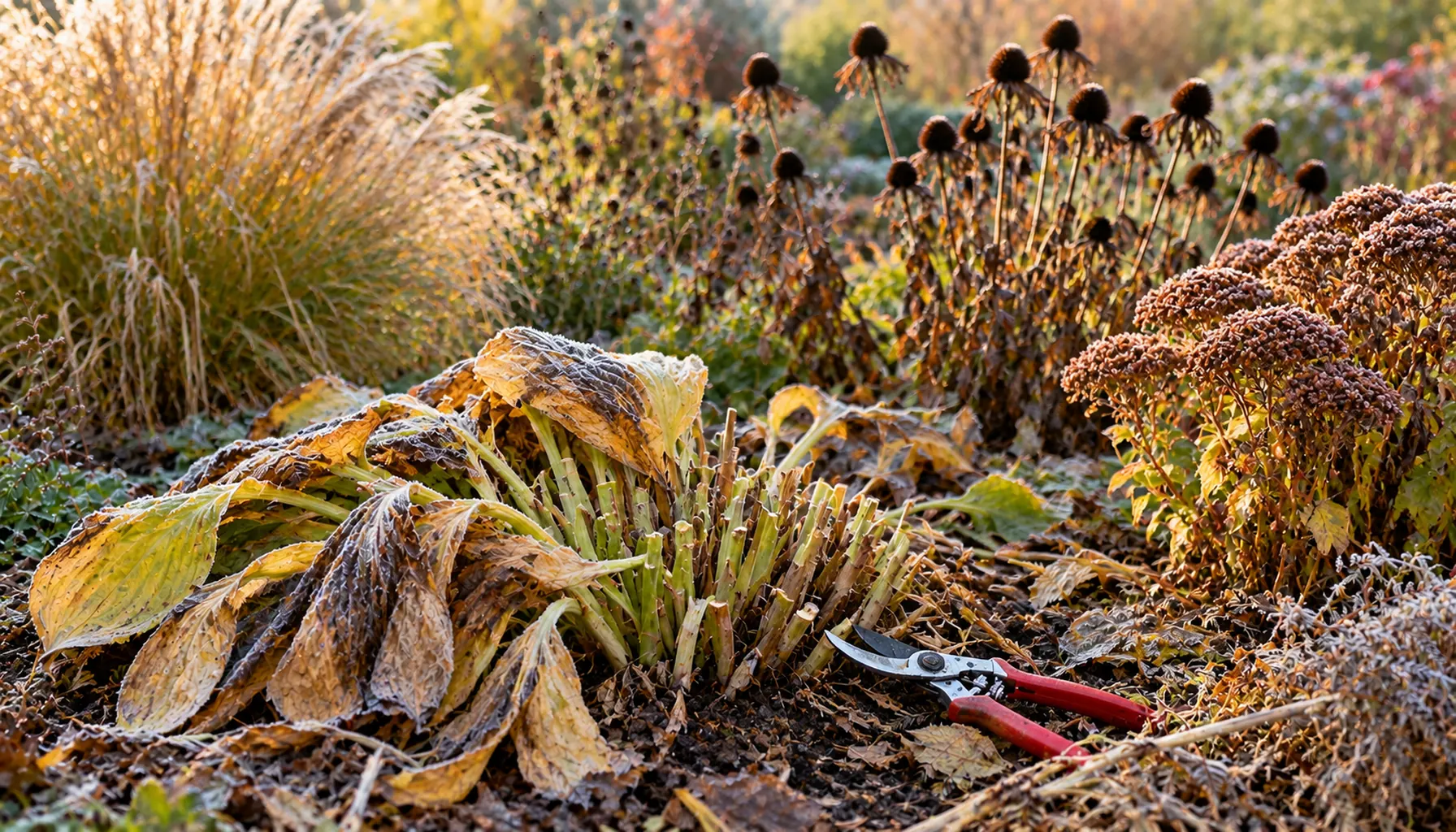
Fall cleanup used to mean cutting every perennial to the ground and raking the beds bare. Most gardeners now take a more selective approach. Plants that carry disease or shelter pests come down after frost, while sturdy stems and seed heads stay up through winter to feed birds, shelter beneficial insects and hold snow around the crowns. The result is less work in fall, a garden with something to look at in January and healthier plants in spring.
The trick is knowing which plants belong in which group, and a few that should not be cut in fall at all.
Quick Answer
After the first hard frost, cut back perennials with diseased or mushy foliage, such as peonies, bee balm, garden phlox, hostas and bearded iris, and throw the debris away. Leave coneflower, black-eyed Susan, sedum and ornamental grasses standing until spring. Do not cut back lavender, Russian sage or garden mums in fall; wait until new growth appears in spring.
When to Cut Back Perennials in Fall
Wait until a hard frost has blackened or collapsed the foliage. A hard or killing frost is generally a night at or below about 28°F (-2°C), and in much of the northern United States and southern Canada it arrives between late September and late October. Until then, green leaves are still making food and sending it down to the roots for next year, so cutting early weakens the plant.
There is no deadline on the other end. Anything you do not get to in fall can be cut in early spring before new shoots appear. If you only have time for part of the job, focus on the disease-prone plants listed below and leave the rest.
Why Leave Some Perennials Standing
Standing stems and seed heads do real work over winter. Goldfinches, chickadees and juncos pick seeds from coneflowers, black-eyed Susans and other composites well into the cold months. Many native bees spend the winter as larvae inside hollow or pithy stems, and other beneficial insects shelter in leaf litter at the base of plants. The Xerces Society, a leading invertebrate conservation group, recommends leaving stems and leaves in place through winter for exactly this reason.
Stems also catch snow and fallen leaves, which insulate the crowns of perennials during cold snaps and reduce frost heaving, when repeated freezing and thawing pushes shallow-rooted plants out of the ground. Finally, grasses, sedum and seed heads give the garden shape and movement when everything else is bare.
Perennials to Cut Back in Fall
These plants are better cut back after frost, either because their foliage carries disease spores or pest eggs into the next season, or because it collapses into a wet mat that invites rot and slugs. Cut them to about 2 to 3 inches above the soil unless noted, and remove the debris from the garden.
Peonies
Herbaceous peonies are the top priority. The fungi behind botrytis blight and leaf blotch overwinter on old stems and leaves, then infect new shoots in spring. Cut herbaceous peonies right to the ground after frost and bag the foliage. Itoh peonies are cut back the same way, leaving a few inches of stem. Never cut a tree peony to the ground, since next year’s flowers form on its woody branches.
Bee Balm and Garden Phlox
Both are prone to powdery mildew, a gray-white coating on the leaves that is worst in humid summers. Cutting the stems back in fall and removing them reduces the amount of fungus waiting to infect next year’s growth.
Hostas
Hosta leaves turn to a slimy mat after the first hard frost. Left in place, that mat shelters slugs and their eggs right where the new shoots will come up. Cut the leaves off at the base once they collapse.
Bearded Iris
The iris borer, the most damaging pest of bearded iris, lays its eggs on old leaves in late summer and fall. The eggs hatch in spring and the larvae tunnel down into the rhizomes. Cut the leaves back to a few inches and clear away all dead foliage around the rhizomes to remove the eggs.
Columbine
Columbine leaves are often marked with pale, winding trails left by leaf miner larvae. The pest overwinters in the soil and debris below the plant, so cutting back infested foliage in fall and removing it from the garden helps break the cycle. Leave a few seed heads if you want columbine to self-sow.
Daylilies and Other Floppy Foliage
Daylilies, lilies and some other perennials leave behind soft foliage that turns mushy over winter. These are not a disease risk in the same way, so cutting them back is optional, but it makes spring cleanup easier and removes cover for slugs.
Perennials to Leave Standing for Winter
These plants have seed heads, sturdy stems or foliage that holds up in cold weather. Leave them in place until early spring, when you can cut the old growth down before new shoots emerge.
Coneflower and Black-Eyed Susan
Their seed heads are among the most valuable winter food sources in the perennial garden. They also self-sow modestly, which some gardeners welcome and others weed out in spring.
Sedum
Tall sedums such as ‘Autumn Joy’ hold their rust-colored flower heads through winter and look striking with a cap of snow. The stems are also easy to snap off at the base in spring.
Ornamental Grasses
Grasses like switchgrass, little bluestem and feather reed grass are at their best in fall and winter. Their foliage also protects the crown from cold and wet. Cut them back to a few inches in early spring before new green blades appear.
Evergreen and Semi-Evergreen Perennials
Coral bells, hellebores, bergenia and some hardy geraniums keep their leaves through much of the winter. Leave them alone in fall, then trim off damaged or tattered leaves in early spring.
Perennials You Should Not Cut Back in Fall
A few plants are actively harmed by fall pruning. Most are woody or only borderline hardy, and their old stems protect the crown through winter.
Lavender and Russian sage are woody subshrubs. Cutting them hard in fall exposes them to winter damage, so wait until you see new green growth in spring, then cut back to just above it. Garden mums overwinter better with their stems left on, especially in colder zones. Tree peonies should only have dead or damaged wood removed. As a rule, any perennial that is on the edge of hardiness in your zone is safer left uncut until spring.
What to Cut and What to Leave
Use this table as a quick reference when you head out with the pruners.
| Perennial | Fall action | Why |
|---|---|---|
| Peony (herbaceous) | Cut to the ground | Removes botrytis and leaf blotch spores |
| Bee balm | Cut back | Reduces powdery mildew |
| Garden phlox | Cut back | Reduces powdery mildew |
| Hosta | Cut after frost | Collapsed leaves shelter slugs |
| Bearded iris | Trim leaves, clear debris | Removes iris borer eggs |
| Daylily | Optional | Mushy foliage, easier spring cleanup |
| Coneflower | Leave standing | Seeds feed birds |
| Black-eyed Susan | Leave standing | Seeds feed birds |
| Sedum | Leave standing | Winter interest, catches snow |
| Ornamental grasses | Leave standing | Winter interest, protects crown |
| Coral bells | Leave standing | Semi-evergreen foliage |
| Lavender | Do not cut | Woody; prune in spring |
| Russian sage | Do not cut | Woody; prune in spring |
| Garden mum | Do not cut | Stems improve winter survival |
How to Cut Back Perennials
Start with sharp, clean bypass pruners for individual stems, and use hedge shears for large clumps. Cut most plants to 2 to 3 inches above the soil. The short stubs mark where each plant is, which helps you avoid digging into dormant crowns in spring. Peonies are the exception and go right to the ground.
Work through the disease-prone plants first. Between plants with mildew or other disease, wipe your blades with 70 percent rubbing alcohol so you do not carry spores from one plant to the next. Rake the cut foliage out of the bed rather than leaving it to rot around the crowns, but leave a light layer of fallen tree leaves in place elsewhere for insects and moisture.
What to Do with the Debris
Healthy stems and leaves can go straight into the compost. Foliage with powdery mildew, botrytis, leaf spots or pest damage should go in the municipal yard waste bin or the trash. Composting only kills disease organisms reliably when the pile stays hot, generally 131°F to 160°F (55°C to 71°C) for several days, and most home piles never reach that temperature throughout.
Other Fall Jobs for the Perennial Garden
Cutting back is only one part of putting the garden to bed. Keep watering perennials, especially anything planted this year, until the ground freezes, since plants that go into winter dry are more likely to suffer damage. Skip fertilizer in fall, because it encourages soft new growth just as the plant should be slowing down.
Once the ground has frozen, spread 2 to 4 inches of shredded leaves or bark mulch over new plantings and anything borderline hardy. The goal is to keep the soil frozen, not to keep it warm, so that it does not heave through freeze and thaw cycles. Early fall is also the best time to divide crowded spring and summer bloomers and to plant bare-root peonies, as long as there are about six weeks before the ground freezes.
Cutting Back Perennials in Cold and Mild Climates
Where you garden changes how much to cut. In cold regions, roughly USDA zones 3 to 5, leaving stems standing matters more, because trapped snow is the best insulation a perennial can get and frost heaving is a bigger risk. Cut back only the disease-prone plants and leave nearly everything else until spring.
In milder regions with wet winters, roughly zones 7 to 9, foliage stays damp for months and rot, slugs and fungal disease are bigger problems than cold. More fall cleanup makes sense there, especially for soft, mushy plants. Semi-evergreen perennials such as coral bells and hellebores may keep growing through much of the winter, so leave their leaves in place and tidy them in late winter.
Common Fall Cleanup Mistakes
The most common mistake is cutting too early. Plants cut back in September while still green lose weeks of food production, and some respond by pushing out tender new growth right before a freeze. Wait for frost.
The second is treating every plant the same. Cutting lavender, Russian sage or garden mums to the ground in fall can kill them, while leaving peony foliage in place carries disease into next year. Cutting too low is a close third: slicing into the crown of a hosta or daylily opens a wound where rot can start, so leave short stubs on everything except peonies.
Finally, avoid raking beds completely bare. Bare soil loses moisture, erodes and freezes more deeply, and it removes the leaf litter that ground beetles, fireflies and other beneficial insects rely on through winter. Clear leaves off the crowns of plants that rot easily, and let a light layer stay everywhere else.
Spring Cleanup for the Plants You Left Standing
Hold off on spring cleanup until daytime temperatures are consistently above about 50°F (10°C). By then, most overwintering insects have become active and left their shelters. Cut old stems down before new growth gets tall, so you do not snip the new shoots by mistake.
Some gardeners go one step further and cut old stems to a height of 8 to 24 inches instead of to the ground. The stubble is quickly hidden by new growth, and it gives stem-nesting bees a place to lay eggs for the next generation. Chop the rest of the old material into short pieces and scatter it under shrubs or at the back of the bed as mulch.
Frequently Asked Questions
These are the questions gardeners ask most about fall cleanup.
Is It Better to Cut Back Perennials in Fall or Spring?
Both work, and most gardens benefit from a mix. Cut disease-prone and mushy plants in fall, after frost, and leave plants with seed heads, sturdy stems or winter interest until early spring. Healthy perennials are not harmed by waiting until spring.
Can You Skip Fall Cleanup Entirely?
Yes, for most perennials. Healthy plants will come back just as well if you do all your cutting in spring. The exceptions are plants with disease or pest problems, such as peonies with botrytis, mildewed bee balm and bearded iris with borers, where fall removal really does reduce trouble the following year.
How Far Down Should You Cut Perennials?
Cut most perennials to about 2 to 3 inches above the soil. The stubs mark the plant’s location and protect the crown from accidental damage. Cut herbaceous peonies all the way to the ground.
Can You Cut Back Perennials Early?
You can cut back a plant that has finished for the season and looks bad, such as powdery mildew on phlox in September, without much harm. For healthy plants, wait until frost has blackened the leaves. Green foliage is still feeding the roots.
Should You Cut Back Hostas in the Fall?
Yes. Hosta leaves collapse into a slimy mat after a hard frost, and that mat shelters slugs and their eggs. Cut the leaves off at the base once they fall over and remove them from the bed.