Perennials in containers bring color to patios, decks and balconies year after year, but winter is where many of them are lost. A plant that sails through a cold winter in the garden can die in a pot sitting right next to it. The difference is not the plant but the roots: in the ground they are wrapped in a huge mass of soil that changes temperature slowly, while in a pot they are surrounded by a few gallons of mix exposed to cold air on every side.
The good news is that most potted perennials can be kept from year to year with a little planning. The right plant choice, the right pot and one of a few simple storage methods will bring the majority of them through even a cold northern winter.
How Do You Overwinter Perennials in Pots?
Choose perennials rated at least two USDA zones colder than your own, in frost-proof plastic, fiberglass, wood or metal pots. After the plants go dormant in late fall, water them well, then sink the pots into the ground, group them against a sheltered north or east wall and insulate them with straw or leaves, or move them into an unheated garage or shed that stays between about 20 and 45°F. Check the soil monthly and water when it is dry and not frozen.
Why Potted Perennials Are Harder to Overwinter
The crowns and buds of hardy perennials are built to survive hard freezes, but their roots are far less cold tolerant. In the garden, that does not matter, because the soil insulates the roots and rarely gets as cold as the air. A container offers almost no insulation. The mix freezes faster, deeper and more often than garden soil, cold reaches the roots from the sides as well as the top, and sunny winter days can thaw a pot only for it to refreeze at night.
Containers also cause two other winter problems. Potting mix dries out quickly, and dry roots are damaged by cold more easily than moist ones, since moist soil freezes more slowly. And pots themselves can crack when wet soil expands as it freezes inside them.
The Two-Zone Rule
The simplest way to avoid winter losses in containers is to choose tough plants. Extension services recommend that any perennial left outdoors in a pot should be rated at least two USDA hardiness zones colder than the zone where you live. A gardener in zone 5, for example, should choose plants hardy to zone 3.
| Your Zone | Choose Plants Hardy To | Examples |
|---|---|---|
| Zone 4 | Zone 2 | Few common perennials; sink pots or use an unheated garage |
| Zone 5 | Zone 3 | Hosta, daylily, sedum, coneflower, Siberian iris, peony |
| Zone 6 | Zone 4 | Coral bells, astilbe, salvia, black-eyed Susan, lamb’s ear |
| Zone 7 | Zone 5 | Lavender, Russian sage, hellebore, most ornamental grasses |
| Zone 8 | Zone 6 | Most common garden perennials |
Plants that do not meet the two-zone rule can still survive, but they need one of the protection methods below. The larger the pot, the better its chances, since more soil holds more heat and freezes more slowly.
Getting Potted Perennials Ready in Fall
Preparation starts in late summer. Stop fertilizing potted perennials by midsummer to late summer, so they are not pushing out soft new growth as the weather cools. Let them continue to grow and harden naturally as the days shorten.
Leave the pots in place through the first light frosts. Hardy perennials need those cool temperatures to go fully dormant, and moving them indoors too early can confuse them. Wait until the foliage has died back or the plants have clearly stopped growing, usually after a few frosts, but move or protect them before the mix freezes solid.
Before storing, water each pot thoroughly so the mix is evenly moist. Remove fallen leaves and dead foliage that could harbor disease, and check for slugs, snails and insects hiding under the rims. You can cut back dead stems on herbaceous perennials to a few inches or leave them until spring; evergreen perennials such as coral bells and hellebores should keep their leaves.
Four Ways to Overwinter Perennials in Pots
Which method you choose depends on your climate, the hardiness of the plants and how much space you have. Many gardeners use more than one.
Sink the Pots into the Ground
Burying pots in the garden is one of the most reliable methods, because it gives the roots almost the same protection as plants growing in the ground. Dig a hole for each pot in a vegetable bed, empty border or out-of-the-way corner, set the pot in so its rim is level with the soil surface and fill in around it. Once the ground freezes, cover the tops with a few inches of straw, shredded leaves or bark mulch. In spring, lift the pots and return them to the patio.
Group and Insulate the Pots Outdoors
If you cannot dig, move the pots to a sheltered spot, ideally against the north or east wall of a house or garage, out of wind and winter sun. Cluster them tightly together, with the least hardy plants in the center where they are best protected. Then pack straw, shredded leaves or wood mulch around and between the pots and over the top of the mix. Wrapping the outside of the group, or individual pots, with burlap or bubble wrap adds another layer of insulation.
Move the Pots to an Unheated Garage or Shed
An unheated garage, shed or cold basement is the best choice in the coldest zones and for marginally hardy plants. The ideal space stays cold enough to keep the plants dormant but protects the roots from the deepest freezes, between about 20 and 45°F, and ideally around 30 to 40°F. Hardy perennials need that cold period, so a heated house is not a good substitute. Dormant perennials do not need light, so a dark garage is fine. Keep an eye out for mice, which may nest in pots and eat roots and crowns over winter.
Plant Them in the Garden for the Winter
If you have space in the ground, you can take the plants out of their pots, plant them in the garden in fall and dig them up again in spring. This works well for perennials that have outgrown their pots or need dividing anyway. Plant at least six weeks before the ground usually freezes so the roots have time to settle in.
| Method | Best For | Drawbacks |
|---|---|---|
| Sink the pots | All hardy perennials, zones 4 to 7 | Needs open ground and some digging |
| Group and insulate | Plants rated two zones hardier, milder zones | Least protection; not enough for tender plants in cold zones |
| Unheated garage or shed | Coldest zones and marginally hardy plants | Needs space; watch for mice and overwatering |
| Plant in the garden | Large or crowded plants | Extra work in fall and spring; disturbs roots |
Choosing Containers That Survive Winter
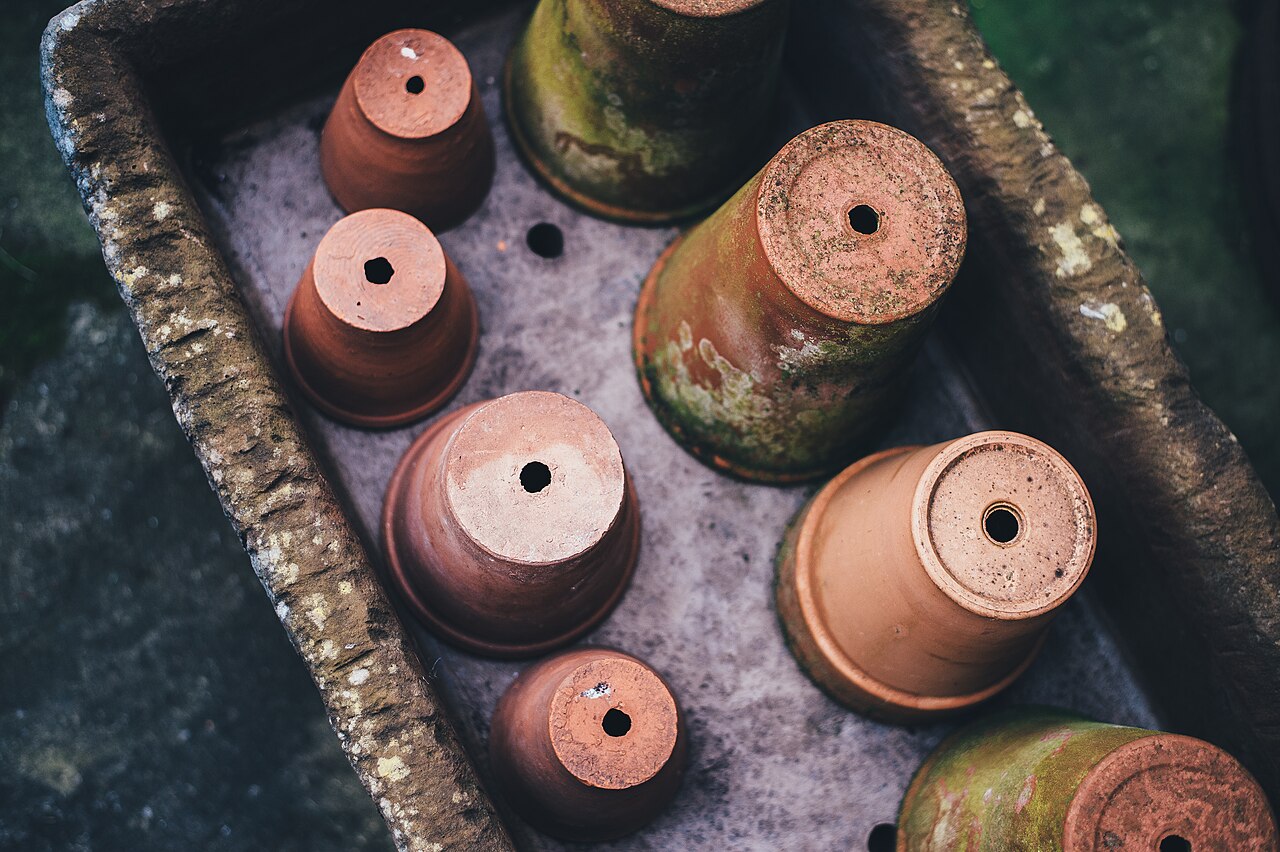
The pot matters as much as the plant. Terra cotta and unglazed clay absorb water and crack or flake when that water freezes, and glazed ceramic and concrete can also crack when wet soil expands inside them. Empty and store these pots indoors, or wrap them if they must stay outside.
Plastic, fiberglass, resin, wood and metal containers handle freezing well and are the best choices for perennials that stay outdoors year-round. Whatever the material, the pot must have drainage holes, since waterlogged mix freezes into a solid block and rots roots. Raising pots on pot feet or bricks helps water drain in fall and spring. Bigger is better: a pot 18 inches or more across holds enough soil to buffer the roots far better than a small one.
Watering Potted Perennials in Winter
Dormant plants use little water, but they still need some, and a completely dry pot can kill a hardy perennial as surely as cold. Moist mix also freezes more slowly than dry mix, which protects the roots. Check stored and outdoor pots about once a month, and water when the mix is dry an inch or two below the surface and not frozen. Water enough to moisten the root ball without leaving it soggy, since cold, wet mix invites rot. If in doubt, err slightly on the dry side. Evergreen perennials and pots against warm walls dry out faster and may need water more often.
Tender Perennials in Pots
Some container favorites, such as geraniums, lantana, mandevilla, fuchsia and many tropical plants, are perennial only in warm climates and cannot survive freezing at all. These need to come indoors before the first frost, not into a cold garage. Grow them as houseplants in a bright, cool window, or let geraniums and similar plants go semi-dormant in a cool basement. Plants that do not fit indoors can be kept as cuttings taken in late summer.
Overwintering Potted Perennials by Climate
In zones 3 and 4, winters are long and cold enough that even hardy perennials in pots are at risk outdoors. An unheated garage or shed, or sinking pots into the ground and mulching heavily, gives the best results. Grouping pots outdoors is enough only for the very hardiest plants.
In zones 5 and 6, sinking pots or grouping and insulating them against a sheltered wall works for most hardy perennials, with a garage reserved for the less hardy ones. Repeated freezing and thawing is the biggest risk here, so keep pots out of winter sun.
In zones 7 and 8, most hardy perennials survive outdoors in large pots with little more than a sheltered spot. Winter rain is the bigger threat, so make sure pots drain well and move them out from under dripping eaves.
Common Mistakes with Potted Perennials in Winter
These are the mistakes that cause the most losses:
- Leaving terra cotta or glazed pots outdoors, where they crack.
- Bringing hardy perennials into a heated house, which breaks their dormancy and weakens them.
- Moving plants into storage too early, before they have gone dormant.
- Letting pots dry out completely over winter.
- Overwatering stored plants, which rots the roots.
- Leaving pots exposed on a windy, sunny deck or balcony.
- Choosing small pots for plants meant to stay outdoors all year.
Bringing Potted Perennials Out in Spring
Move stored pots back outdoors, or uncover and lift sunken ones, once the danger of a hard frost has passed. Plants kept in a dark garage may have started pale new shoots; place them in shade for a week or so before moving them into full sun, so the tender growth does not scorch.
Clean up dead leaves and stems, and replace the top inch or two of mix with fresh potting soil and compost. Resume regular watering, and start fertilizing once active growth has resumed. Perennials that have filled their pots can be divided or moved up to a larger container at this time.
Frequently Asked Questions
These are the questions gardeners ask most about overwintering perennials in containers.
Can Perennials Stay in Pots Outside All Winter?
Yes, if they are rated at least two USDA zones colder than your own and grow in large, frost-proof pots. Less hardy perennials need to be sunk into the ground, grouped and insulated, or moved into an unheated garage or shed.
Should You Water Potted Perennials in Winter?
Yes, a little. Check pots about once a month and water when the mix is dry and not frozen. Dormant plants need far less water than in summer, but they should not dry out completely.
Can You Store Potted Perennials in a Garage?
Yes. An unheated garage that stays between about 20 and 45°F is one of the best places to overwinter potted perennials. The plants stay dormant, the roots are protected from the hardest freezes and light is not needed.
Should You Cut Back Perennials in Pots before Winter?
It is optional for herbaceous perennials. You can cut dead stems back to a few inches in fall or wait until spring. Do not cut back evergreen perennials such as coral bells and hellebores.
Can You Bring Hardy Perennials Inside for the Winter?
Not into a warm house. Hardy perennials need a cold dormant period, and indoor heat keeps them growing weakly and can kill them. Use an unheated space instead, and bring only tender perennials into the house.
Sources
- Overwintering Potted Plants, University of Illinois Extension
- Overwintering Potted Plants, Brooklyn Botanic Garden
- USDA Plant Hardiness Zone Map, U.S. Department of Agriculture